

Do you ever find yourself saying “I can’t”? Sometimes, it’s perfectly reasonable: I can’t drive is simply a statement of fact, if you haven’t yet passed your test.
But often, I can’t is loaded down with self-judgment:
- I can’t draw.
- I can’t sing.
- I just can’t stay organized.
- I can’t ever get it right.
- I can’t lose weight.
How often do you say “I can’t” when it’s, at best, a half-truth? Maybe you really think that you can’t draw – but is that just because you’ve never actually tried? And if you can’t get organized, or quit smoking, or lose weight … do you really mean that you won’t?
“Can’t” Saps Your Power
Whenever you say you can’t do something, you’re reinforcing that message in your mind. For years, I told myself that I couldn’t draw. I’d never really done any drawing – apart from a few compulsory lessons in school – but I knew I was no good. I couldn’t draw people. I couldn’t draw still-life arrangements. I couldn’t draw anything.
Then I picked up a copy of Betty Edwards’ Drawing on the Right Side of the Brain and realized that the only reason I couldn’t draw was because I’d never tried to learn. I had a go at some of the exercises in the book, and pretty quickly found that I just didn’t like drawing.
That’s okay! It’s fine to not want to do something. But it’s important to acknowledge that, if you wanted to, you could. If I really wanted to learn to draw, I could finish the book, or go to a class, or spend an hour or two every day with a pencil in my hand.
Changing that “Can’t”
If there’s something in your life which you’d like to do, but which you can’t do, what’s the “can’t” and what’s the real reason behind it?
Maybe it’s one of these, or something similar:
- I can’t quit my job and start working for myself (because I’m scared that it’ll all go wrong)
- I can’t lose weight (because I don’t really want to)
- I can’t quit smoking (because I need some help)
- I can’t get organized (because I don’t take the time to establish a good system)
I know that some of the things that you “can’t” do are big, emotional, tricky problems. You might want to talk to someone – a trusted friend or relative, or even a professional coach or counselor – to work through some of these areas.
Usually, though, it’s rare that there’s anything which you really truly can’t do – if you put your mind to it.
To change a “can’t” into a “can”, you might need to:
- Get more information – from books, websites or people who you know
- Build up your confidence – by taking small steps
- Become more determined – perhaps by finding a group of like-minded friends (e.g. a slimming club)
- Admit that the only thing holding you back is you
You’ve Overcome Lots of “Can’t”s Already
Once, you couldn’t do very much at all. You couldn’t walk, talk, or feed yourself.
Even when you were at school, there were loads of basic things which you couldn’t do. You couldn’t cook, or drive, or follow a map.
Throughout your whole life, you’ve been facing new challenges. Some of those might have been huge at the time – like when you first left home – but they seem pretty small in retrospect.
It’s the same with all those things that you can’t do today. They might seem big and challenging – almost impossible – right now, but they’re not. Plenty of other people have tackled and conquered the same things (and they started out from just where you are right now).
What would you love to do which you think you can’t manage right now – and how’re you going to change that?
Don’t Forget To Follow PickTheBrain of Twitter!
Related Articles:
Words That Overcome Fear and Dread
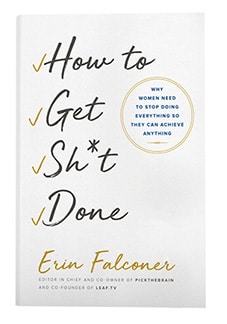
GET THE BOOK BY
ERIN FALCONER!


Really informative blog article. Fantastic.
where to buy viagra canadian pharmacy viagra generic viagra online
generic viagra names buy viagra generic order viagra online
cialis online generic cialis for sale cialis 20mg price
buy generic 100mg viagra online buy viagra online generic for viagra
erectional dysfunction ed treatment prescription meds without the prescriptions
cheap medication online non prescription ed pills cure for ed
is there a generic for viagra cheap ed pills buy viagra
viagra pills buy viagra from canada viagra without prescription
buy viagra online canada buy viagra generic viagra without prescription
goodrx viagra buy viagra from canada walmart viagra
how can i order prescription drugs without a doctor ED Pills ed solutions
canadian medications Cheap Erection Pills the best ed pill
canadian pharmacy online ED Pills Without Doctor Prescription ed pills that work
amoxicillin without a doctor’s prescription generic ed pills male dysfunction pills
ed pills online Cheap Erection Pills ed cures that work
ed prescription drugs cheap ed pills medications for ed
cost of cialis cheapest cialis is generic cialis safe
nose congested when taking cialis generic cialis for sale cialis vs viagra
ed doctors best ed pills best medicine for ed
natural ed treatment buy prescription drugs without doctor ed meds online
generic drugs from india buy generic drugs online
payday loans payday loans online
buy generic drugs from canada buy generic drugs
buy generic drugs from canada canadian pharmacy
buy tadalafil tadalafil for sale
221466 957417Fantastic website you got here! Yoo man great reads, post some much more! Im gon come back so much better have updated 292610
viagra canada buy viagra generic where can i buy viagra
887643 167617Thank you, Ive just been searching for data about this topic for a although and yours could be the greatest Ive discovered till now. But, what in regards towards the conclusion? Are you positive concerning the supply? 247015
Thanks for the post
The best e-cigarette liquid site in Korea. Korea’s lowest-priced 전자담배 액상 사이트 e-cigarette liquid.
스모크밤287 스모크밤
에볼루션코리아
461CPANVO[}}
에볼루션카지노
756eDPMQj;.`
에볼루션바카라
745vqgvAg”.]
에볼루션룰렛
935qgAhGc#^[
에볼루션블랙잭375xpBRFg|>$
에볼루션카지노
154Curtqa/,[
에볼루션카지노
150MXmztW:<]
에볼루션카지노
263JODLWj%$”
에볼루션카지노
864kPFyRx#[?
에볼루션카지노
402RojbRO?|’
강남카지노강남오프라인카지노,강남사설카지노 놀러오세요^^
Hey, thanks for the blog post.Really looking forward to read more. Will read on…