

Photos by Esther G and Mezone.
“Writing is easy: All you do is sit staring at a blank sheet of paper until drops of blood form on your forehead.” – Gene Fowler
Perhaps this is a sentiment that all writers can share to some extent. However, writing doesn’t have to be a tortuous experience akin to banging your head against a wall. Frustration rarely helps our writing; good writing is perfectly compatible with efficient and reasonably quick writing. If you would like to become a fast and efficient writer, the following are 10 suggestions that have the potential to dramatically increase your productivity.
Clear Mind
Writing is a creative exercise which benefits from having a clear mind. If your mind is cluttered with distracting thoughts you will struggle to write effectively and fluently. When writing you need to concentrate on nothing else other than the subject of your writing. This requires a combination of one-pointedness and concentration; only if we can absorb ourselves into writing will we be most productive. How can we write anything meaningful if 50{54c12dad2cc2b53ae830e39915b1a3e70288dbcbbeb8bbf8395437c5dc3c512c} of our thoughts are worrying about miscellaneous events in our lives? To cultivate a clear mind, it is helpful to set aside certain times just for writing – then, during this time, be disciplined about keeping your mind free of distracting thoughts.
Start Somewhere
Often when we write the first sentence can prove to be the most challenging. It is also by far the most important because it will determine whether people keep reading or not. For this reason it is common for a writer to become overly concerned about getting the ‘perfect’ start to an article. The problem is that aiming for perfection becomes a block to writing anything. If you are struggling to begin, start anywhere – even in the middle. Once you have written several paragraphs it may become more obvious how you can best start the article.
Accumulate Ideas
As you go about your day, try to accumulate ideas for articles in your mind. You can use this time to consider various titles for your articles and to recall relevant anecdotes. Keep a notebook for ideas. I find that an article becomes quite easy to write if I have:
- A good title
- 7 key points / paragraphs.
- I know the subject relatively well.
- Write from Experience / Knowledge
Having written on many different topics, I know how difficult it can be to write on a topic you know little about. Also, if you are writing on new topics, it can be hard to be original and offer something unique. Stick to what you know and are able to write knowledgeably about. If you need to research articles, wait until you have developed a good background in the subject before starting to write.
Practise the Art of Writing
There is no secret formula for writing effectively. Like any activity, practise will enable you to get better. It is important to be able to get into a flow of writing; for example, many suggest it is advisable to write quickly but then be willing to throw out the bad. Ernest Hemingway was a great believer in writing and then being willing to toss out 90{54c12dad2cc2b53ae830e39915b1a3e70288dbcbbeb8bbf8395437c5dc3c512c} of what he wrote. This might not sound very productive, but it can help because you are free to write without worrying about perfection.

Write in Unlikely Situations
Travelling on a train or even at a airport can give us several spare hours. These can often be very productive times for writing – because we have little else better to do. Don’t imagine that writing has to involve retreating to a Himalayan cave. If you wait for the perfect environment you will wait in vain.
Positive Attitude
Related to a clear mind is the importance of maintaining a positive attitude. Here, a positive attitude really involves avoiding negativity. Sometimes as writers we can easily become discouraged and feel our writing is not good enough. When we have a fear of failure or feeling of unworthiness, it is hard to do anything worthwhile. Our worries act like a subconscious break on the flow of our writing. We don’t need to have an excessively positive attitude, it is sufficient just to abandon negative sentiments.
A Working Environment
It is important to find an environment suitable for writing. Avoid noisy and cluttered places. The less distractions you have the better chance you will have of being able to concentrate. If you write from home, try to create a space where you will not be continually interrupted. A simple “Do Not Disturb” sign can do wonders for your productivity.
Music / Silence
To gain fresh inspiration, it is good to write in different surroundings. Finding a good cafe can make a welcome change; the only drawback of writing in public places is the background noise which can be distracting. Using an MP3 player can drown out the background sound; however, you have to be careful you don’t let the music distract you. I went through a period of going to cafes with my laptop and listening to my favourite playlists; I was really enjoying the music, but I hardly managed to write anything. If you do listen to music, make sure you choose something fairly ‘neutral’. If music doesn’t work you can always try noise cancelling headphones.
Be Committed
To write well you need to be fully committed to your writing. It doesn’t work to write tentatively, worrying about whether it will be good enough. Be bold and committed. When you write, concentrate on writing and don’t do anything else. By giving writing your 100{54c12dad2cc2b53ae830e39915b1a3e70288dbcbbeb8bbf8395437c5dc3c512c} attention you are guaranteed to boost your productivity. For example, if you are a blogger, try writing away from the internet and the temptations of mindless surfing.
Tejvan writes for several blogs including Net Writing, a site which features tips for writers and bloggers. Netwriting has a variety of articles focused on productivity, suggestions for improving writing and also general blogging tips.
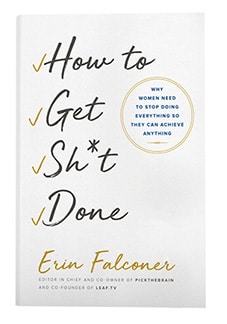
GET THE BOOK BY
ERIN FALCONER!


114883 154511Why didnt I take into consideration this? I hear exactly what youre saying and Im so pleased that I came across your blog. You actually know what youre talking about, and you made me feel like I ought to learn more about this. Thanks for this; Im officially a huge fan of your weblog 18178
708498 576789As I web-site possessor I believe the content matter here is rattling fantastic , appreciate it for your efforts. You must keep it up forever! Greatest of luck. 63182
777252 547507I discovered your internet site website online and check a lot of of your early posts. Keep on the top notch operate. I just now additional your Feed to my MSN News Reader. Seeking for forward to reading significantly far more from you obtaining out later on! 860917
에볼루션코리아
641vhvOiY[#:
에볼루션바카라
814zCXeiq{~~
에볼루션룰렛
965wLsuMJ#`>
에볼루션블랙잭215iubYrF#@$
The best e-cigarette liquid site in Korea. Korea’s lowest-priced 전자담배 액상 사이트 e-cigarette liquid.
스모크밤489 스모크밤
전자담배 액상 사이트 The best e-cigarette liquid site in Korea. smok25 Korea’s lowest-priced e-cigarette liquid. 스모크밤432 스모크밤
제주셔츠룸
931XEdZJy@?-
제주레깅스룸
019gattiE-]\
에볼루션카지노
897tXTTYR`:]
에볼루션카지노
750LMdPgZ`<*
에볼루션카지노
561NZNIuX+=]
815mZaThJ%”+
잠실룸싸롱
464YZGzPI)*#
강남카지노빠
551JVUGlJ}_”
강남카지노강남사설카지노,강남오프라인카지노 놀러오세요~~
Phenomenal is the best efficiency tool for active individuals who want to obtain even more done in much less time.
Your article offered viewers with an in-depth consider the topic, providing a complete understanding of it.
Your interest motivates others to do their best. I appreciate your nerve as well as decision.
The degree of information that you included in your article offered visitors a thorough understanding of the topic.