

Reading is all about information. It’s not about the number of words you read, but the amount of value you extract from them. The key to improved reading comprehension isn’t moving your eyes across a page more quickly. It’s about creating a mental framework that helps you process words and ideas.
With a bit of practice, anyone can read faster and more productively. The steps outlined below will help you to extract the maximum amount of information in the least amount of time.
The Pre-Reading survey
Nearly all speed reading courses recommend doing a pre-reading survey. The purpose is to gain a better understanding of the content and structure of the material. You’d be amazed how often people read through an entire book, only to realize that the information they need isn’t there. Pre-reading will make your reading more efficient by creating a mental map.
Start by reading the table of contents and the first page of the introduction. Then flip quickly through the material, reading only chapter titles, headings, and bold face print. Don’t worry about remembering anything specific, it’s more important to get a general impression.
The entire process should take less than 5 minutes. Afterwards you’ll know the layout of the book and the location of different topics. If you’re only interested in one particular section, you now know where to find it.
Define Your Purpose
Now that you have a general grasp of the material, you need to define a purpose. What information are you hoping to gain? This sounds like a simple question, but sometimes it isn’t. Different readers can have drastically different objectives. If you don’t define a purpose, it’s likely you’ll get bogged down by unimportant sections or ignore crucial ones. By clarifying what you need to know, you’ll be able to distinguish the important from the irrelevant and allocate your attention accordingly.
Create questions the reading should answer
In addition to a general purpose, it’s also helpful to write down specific questions. This focuses your mind on a set of objectives and gives you a way to measure comprehension. By writing down questions, you create a set of mental cues. Whenever you spot an important keyword in the text, you’ll become aware of the question it relates to and your mind will start looking for an answer.
Take notes or highlight important concepts
One of the best ways to embed something in your memory is to write it down. When you read an important point, make a note of it on a separate piece of paper, inside the margin, or use a highlighter. This will help you remember what you read and make the important sections easy to find when you review the text.
The post-reading review
After you finish reading, you need to determine what you learned. Did you achieve your purpose? Try to answer the questions you created beforehand. If you aren’t able to answer them, go back and look for answers near your notes. This process will solidify the knowledge in your mind and give you better recall. You’ll know what you learned, what you didn’t, and whether or not you need to go deeper into the text or look for other sources.
Image by zinkwazi.
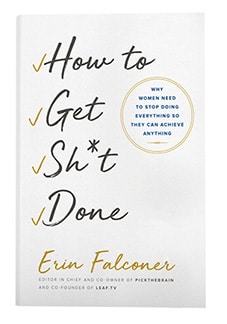
GET THE BOOK BY
ERIN FALCONER!


viagra over the counter walmart generic viagra canadian pharmacy generic viagra
714208 355181As I web site possessor I believe the content matter here is rattling great , appreciate it for your efforts. You ought to keep it up forever! Great Luck. 61418
viagra without a doctor prescription Cheap Erection Pills erectile dysfunction
ed remedies generic cialis online prescription for ed meds
356294 669184Hello. Fantastic job. I did not expect this. This really is a exceptional articles. Thanks! 57707
656165 652127Will you care and attention essentially write-up most with the following in my webpage in essence your web site mention of this blog? 754317
513069 589548Right after study quite a few the websites on your own internet site now, i truly like your indicates of blogging. I bookmarked it to my bookmark site list and will also be checking back soon. Pls consider my web-site likewise and tell me what you consider. 472699
708088 510554Outstanding post, I conceive men and women really should larn a good deal from this internet website its genuinely user genial . 350175
check out my nude pic
Thanks for the post
159412 903451Hey there. I want to to ask slightly somethingis this a wordpress web log as we are preparing to be transferring over to WP. In addition did you make this template all by yourself? A lot of thanks. 760631
割引オファーにより、男性は地元のお店に比べてより良いコストでセクシーな人形を手に入れることができます。そのため、この提案を見逃してはなりません。 ラブドール https://yourdoll.jp
에볼루션코리아
606kZSOUJ&^,
에볼루션카지노
529hvSaUF:;{
에볼루션바카라
493wtFuUG(._
에볼루션룰렛
117DgiNTS”{;
에볼루션블랙잭297STBIuO*:,
The best e-cigarette liquid site in Korea. Korea’s lowest-priced 전자담배 액상 사이트 e-cigarette liquid.
스모크밤046 스모크밤
전자담배 액상 사이트 The best e-cigarette liquid site in Korea. smok25 Korea’s lowest-priced e-cigarette liquid. 스모크밤921 스모크밤
제주룸340PoUvIO;))
강남사설카지노
145VfCXFQ&?;
강남카빠
527pTbvGP{#*
강남카지노빠
115cDYoJg:<,
강남사설카지노
351RbjfCe~’,
강남카지노강남사설카지노,강남오프라인카지노 놀러오세요~~