
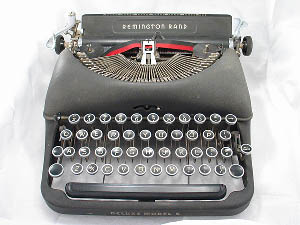
If you are a writer, you’ve probably wished that you could write faster, better, and easier. I have too. I’ve been writing for many years now and I’ve found some tricks that help. They just may help you too! Everyone has their own system, but sometimes learning about another person’s system can flip a switch that enables you to improve your writing.
This system is about being organized and prepared. This will allow your ideas to flow at their fastest rate. It doesn’t necessarily mean that they will flow at lightning speed, but I think you”ll find this allows them to flow at their maximum speed.
The Writing Routine
1. Dream Time. This is where you prime the pump, your thinking time. I recommend having set times each day where you allow yourself to brainstorm away from inputs such as TV, computer, print materials, and people. Some ideas of where and how: being where you can look at nature, while exercising, or sitting in a darkened room. You can also use those unplanned times during the day where you find yourself waiting. If any of these times allow you to close your eyes, that can be very helpful. During these times, do some purely brain based free thinking and if you come up with some ideas, do some pre-planning in your head.
2. Idea Time. This is where you expose yourself to a variety of new inputs to generate ideas. In life we often have routines, go places, and read things that are often the same. Find ways to expose yourself to new ideas every week. You might not get to this every day, but try to do this at least weekly. Ideas are: reading magazines you don’t normally read, watch TV shows you don’t normally watch, call a friend or colleague you haven’t spoken to in a while, go somewhere new, listen to different music, or even do a “walkabout” online where you see where the cyber winds blow you on a particular topic. As you do this, be prepared to discover ideas you can use in your writing.
3. Planning. The next step is to write your outline. Don’t worry about it being 100{54c12dad2cc2b53ae830e39915b1a3e70288dbcbbeb8bbf8395437c5dc3c512c} complete or accurate. Many times my outline will change as I write my first draft. The important thing about an outline is it helps you to stay focused as you are writing. It keeps you on track which will help you write faster. You can change your outline on the fly once you’re writing. The outline can be rough, but the more detail you can fill in the faster your writing will go.
4. Research Time. Depending on what you are writing you may need more or less of this. The key with research is to strike a balance between getting enough information, but not spending more time than is needed. So how do you stay focused during research and keep from getting pulled into the web’s infinite distractions? Planning, clipping, and distilling. Here’s how:
Planning: Before you go to Google or other sources, write out in bullet points the questions you need to answer.
Clipping: When you find information you need “clip it” which means to collect it somehow. Don’t read the research in depth until you it’s assembled in one place.
You could clip it using Google Notebook or Evernote, both of which are free online applications. Or you could simply clip it using a text file. If you do that, be sure to also clip the URL and source so you can cite it in your work.
If you are working with print material, either make photo copies or take notes, also being sure to include the source information.
If you are working with original research, you can either take notes or use a recording device. If you use this a lot you could look into voice recognition software to convert it into text later.
Distilling: This is where you highlight only the information that you plan to use, the quotes, the facts, the bullet points. This makes it easy to refer to when writing. You can highlight online with boldface or color, or highlight on paper with a highlighter pen. Do your distilling after you’re done collecting all your research information.
5. First Draft. With your outline as your guide and your research facts handy, just start writing. If you need to fill in facts and figures that you don’t already have then highlight them in some way to come back to them later. The idea is to keep the flow going on this first draft. Even if you have the facts, you can fill them in later to keep your writing moving along.
If you normally write on the computer, give longhand a try for your first draft. I use both longhand and typing for first drafts, but I have to admit that writing longhand always makes it flow faster.
If you are tired, just type your outline assuming you have it in longhand. Tell yourself it’s ok if this first draft stinks, because once you have the body written then you have something to work with! If you’re really tired, quit and get some rest. You won’t get good work done if you’re exhausted. If you must meet a deadline, at least take a small break. It will boost your productivity.
6. Type It. If you have your first draft in longhand. This will also be your first edit. If you are a hunt and peck typer, do yourself a huge favor and take a typing course. Here is a link to a free online typing course. The time you invest in learning this skill will pay major dividends in time.
7. Print It. Some may not like this option because it is not environmentally friendly. If you can edit on the computer screen, then go for it. I need to read from paper for editing. I just find that I can concentrate, find mistakes, and fill in gaps better when I read from paper. Re-use paper by printing on the flip side of used paper. I keep a pile of “garbage” paper for this purpose. Also, try printing in a different font than you type in. This trick helps you to find errors more easily.
8. Editing: Read Out Loud. It may seem funny, but this is a good practice. Read your draft out loud as you are editing. You’ll be more likely to find errors and parts that need to be re-written. The more time that you can let pass between writing and editing, the better too. Remember to fill in data that you left out when writing the first draft. Depending on how important the piece is, you may want to ask another person edit it as well. And then finally you may want to do a final edit.
9. Final Draft. Type in your edits and then do one more final read through before publishing or sending it off to be published.
10. Quiet. All of the above steps will work best if you can work in a quiet, distraction free environment. Turn off and remove everything but the essentials when writing. If you do have noise in your environment on a regular basis, try to find a solution such as a new location or noise cancelling headphones.
These steps may seem longer when you read through them, but they truly will make your writing better, and your ideas will flow faster and easier.
What are your tips for writing? Please share in the comments below!
Written for Pick the Brain by K. Stone, author of Life Learning Today, a blog about daily life improvements. Popular articles include How to Write a Book in 60 Days or Less, How to Nap at Work – or Anyplace You Need a Rest, and Should You Start Your Own Work at Home Business?
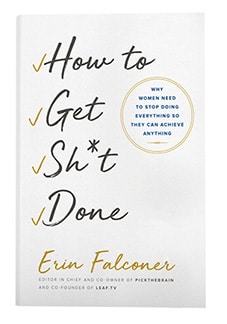
GET THE BOOK BY
ERIN FALCONER!


its really helpful to the students and not only students also inn society high school and primary school
best place to buy viagra online buy viagra generic buy generic 100mg viagra online
cheapest generic viagra buy viagra online viagra online canadian pharmacy
cheap cialis cialis online low cost cialis
cheap viagra online generic viagra without a doctor prescription viagra walgreens
erectile dysfunction cure google viagra dosage recommendations buy ed pills online
generic viagra online viagra generic viagra online for sale
medications online
generic viagra without a doctor prescription buy generic drugs order viagra online
ed supplements
how to get viagra buy viagra online amazon viagra
anti fungal pills without prescription
cheapest viagra online viagra canada mexican viagra
is ed reversible
where to bay cialis (tadalafil) pills 80mg generic cialis cialis coupon code
natural treatments for ed best ed pills viagra without a prescription
natural ed cures
best drug for ed canadian drug pharmacy treatment for ed
canadian pharmacy
valtrex uk pharmacy where to buy valtrex online
cheap zantac zantac
ventolin tablets 4mg ventolin online uk
buy sildenafil online sildenafil generic
buy cheap tadalafil buy tadalafil
sildenafil without doctor prescription cheap sildenafil
have a sex
new ed drugs https://sildenafilxxl.com/ mail order viagra
aspirin and ed meds online without doctor prescription ed pills
Keep It up Buddy |
ed meds online without doctor prescription canadian pharmacy viagra medication online
viagra for sale buy viagra how to get viagra without a doctor
natural herbs for ed canada drugs online comparison of ed drugs
non prescription viagra viagra viagra from india
erection pills canadian pharmacy online erectyle disfunction
help with ed: aspirin and ed ed doctor
over the counter ed: over the counter ed remedies men with ed
cheap zithromax pills where to get zithromax buy zithromax online cheap
viagra without doctor prescription amazon canadian online pharmacies prescription drugs online without doctor
take cialis with or without food cialis 20mg current cost of cialis 5mg cvs
can you have multiple orgasms with cialis best liquid cialis cialis for peyronie
how often to take 10mg cialis warnings for cialis cialis vs viagra
where to get zithromax over the counter zithromax 250 buy zithromax
良いブランドも非常に費用対効果が高いです。 彼らはクライアントにさまざまな複数のオプションを提供することができます。 これは、問題や苦情なしに賭けの結果を得るのに役立ちます。 ラブドール 140cm
Pingback: 50 Resources And Tools To Turbocharge Your Copywriting Skills - Marketing Solution Australia
Pingback: 50 Resources And Tools To Turbocharge Your Copywriting Skills – Blog on Graphic Designs, Web Designs, Web Development and Android Development
Pingback: 50 Resources And Tools To Turbocharge Your Copywriting Skills -
Pingback: 50 Resources And Tools To Turbocharge Your Copywriting Skills – Development tools
에볼루션코리아
503uRpbUK#`|
에볼루션카지노
167pRmWus]{+
에볼루션바카라
777veZPcM)*`
에볼루션룰렛
209cfboJn-).
에볼루션블랙잭147xuBKVn_{_
The best e-cigarette liquid site in Korea. Korea’s lowest-priced 전자담배 액상 사이트 e-cigarette liquid.
스모크밤874 스모크밤
전자담배 액상 사이트 The best e-cigarette liquid site in Korea. smok25 Korea’s lowest-priced e-cigarette liquid. 스모크밤153 스모크밤
In a world filled with challenges and conflicts, the notion that a straightforward formula can be the catalyst for resolution and transformation is genuinely empowering. It serves as a poignant reminder that effective solutions often lie in simplicity and accessibility for everyone. ghughuti“The crux seems to be embracing a systematic approach to problem-solving, fundamentally altering how we navigate conflicts. The insights shared here prompt a paradigm shift, offering a genuine opportunity to reshape our reality positively. I’m intrigued to hear about personal applications of these principles—how have you integrated this uncomplicated formula into your own life? Sharing experiences could provide valuable insights into the diverse ways individuals have implemented this formula for positive change.
Really like this perspective—focusing on fewer priorities feels much more realistic than constant hustle culture. The same simplicity matters online too with Instagram bio Tamil fonts for quick personalization.
I love the balance between planning and not over-researching. That “clipping before distilling” method just saved me from falling into a Wikipedia black hole. Also, writing longhand for the first draft is something I’d never considered, but now I’m curious. You can also explore Disney Font Generator can Create Magical Text in Seconds!