

Have you ever started off a project feeling really enthusiastic about it – perhaps even to the point that you were losing sleep? Whether it was a new business direction, or book, or piece of art, or home improvement, or diet … it had you gripped. In the early stages, you found yourself thinking about it in the shower, jotting down ideas in the evening, wondering “what if…”
But somewhere along the way, you simply lost motivation. Perhaps you let your diet slide for a while and just couldn’t get up any enthusiasm to restart. Maybe you stopped writing your novel for months, and stopped caring too. Or you woke up one day and realised you dreaded grinding through any more of the steps in that business plan.
We know what it’s like to be motivated – and we know what it’s like to be unable to sustain that motivation. Here’s how to make sure you stay consistently motivated: so that you don’t burn out or lose interest.
Find the Right Number of Projects
First, your problem could be that you’re doing too much … or it could be that you’re not doing enough. Some people work best when they focus single-mindedly on one project: they can achieve astonishingly fast results like this. Others (myself included) prefer to work on lots of different things at once, changing tack frequently to avoid boredom.
Do You Have Too Many Projects?
Signs that you’ve got too much going on are:
- Feeling like you never have any breathing space
- Never getting to the bottom of your to-do list
- Worrying constantly that you should be doing something else, whatever you’re working on
- Spending ages figuring out where you’d got to with each project, every time you pick it up
- Never making any significant progress
- Sabotaging one project for another (e.g. being too busy with your job to stick to your goal of regular exercise)
Do You Have Too Few Projects?
Having too little to do can also be a problem, manifesting as:
- Often feeling bored, and wishing you had something engaging to do
- Going out and buying games, DVDs, books, etc because you want something to occupy your mind and your time
- Feeling listless, feeling that it’s not worth getting up in the mornings because there’s nothing to do
- A sense that you’re not doing anything meaningful
- Trying to focus on one goal or project but getting rapidly bored of it
Whether you’ve got too much or too little going on, recognise that this will prevent you from staying consistently motivated. You need to be doing enough to keep your mind interested and your heart engaged … but not so much that you’re trying desperately to fit it all in.
Know When to Work … and When to Stop
Do you have a clear handle on when it’s best for you to work, and when you need to stop? You might start off by thinking about your most productive times of day and focusing on working during those hours, but you’ll also want to get a handle on when you’re just distracted and need to focus, verses when you need a proper break.
Pressing On Through Distractions
Sometimes, you might be struggling to focus due to distractions. This is a problem for a lot of us, especially if we work online. There are plenty of tips and tricks for cutting down your distractability – like turning off new email notifications, signing out of social media applications and even switching off your internet connection altogether.
Whenever you start on a creative or high-energy piece of work, you’ll probably find yourself experiencing some resistance. Of course it’s easier to play around on Facebook or Twitter, instead of writing the next section of your business plan. But if you filter out the initial distractions and suppress your urge to respond to your impulses, then you’ll usually get going well.
Taking Proper Breaks
Sometimes, though, you’re struggling to focus because you genuinely need to take a break. If you’ve been working for a couple of hours on a project, you may just be running out of steam. Getting cranky, upset, exhausted or feeling otherwise low can be a warning that it’s time to step away from what you’re doing.
This also applies on a broader level: if you’re finding yourself struggling for motivation on a daily basis, you may need to take a weekend, a week or even more away from your projects.
Figure Out What Works for You
When it comes to staying motivated, we’re all wired a bit differently. Some of us like a boot-camp style personal trainer to push them hard; others want an encouraging and supportive friend. For some, working first thing in the morning is perfect; others are night owls.
Don’t be afraid to ditch advice that doesn’t work for you. Here’s just one example of how people can be differently motivated, and how you could pick a different guideline depending on what works best for you:
Do Hard Tasks First
Some gurus advise getting hard tasks out of the way first thing during your work day. Perhaps it’s something which takes a lot of creative energy, or something which you dread doing: any task which you’re feeling a lot of resistance to.
This works for some people, because it means the rest of the day is an easy coast downhill.
Do Easy Tasks First
Other experts suggest “warming up” by tackling a few easy tasks first thing: something which doesn’t require too much thought and which you can almost do on autopilot.
This one works because it eases you in gently, and lets you feel the motivational boost of ticking off several items straight away.
The trick is to figure out what works for you … for me, that’s doing a couple of easy tasks and then going straight into a difficult one.
How do you stay motivated, consistently? Whatever type of project you’re working on, let us know your thoughts…
Don’t Forget To Follow Us On Twitter!

Related Articles:
How To Increase Self Discipline
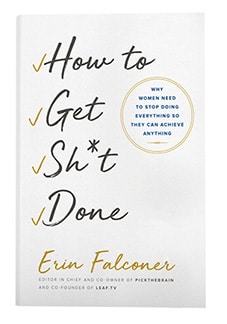
GET THE BOOK BY
ERIN FALCONER!


Your current blogs always possess a lot of really up to date info. Where do you come up with this? Just saying you are very creative. Thanks again Sex Doll Blog
TEF6894H/V3,557 is available. We are distributor of NXP Semiconductors / Freescale TEF6894H/V3,557. Buy TEF6894H/V3,557 IC RADIO SIGNAL PROC 44-QFP.
The best e-cigarette liquid site in Korea. Korea’s lowest-priced 전자담배 액상 사이트 e-cigarette liquid.
스모크밤353 스모크밤
전자담배 액상 사이트 The best e-cigarette liquid site in Korea. smok25 Korea’s lowest-priced e-cigarette liquid. 스모크밤821 스모크밤
에볼루션코리아
837GbCXBk^}”
에볼루션카지노
875POgatr'<'
에볼루션바카라
917FDsKxo.*,
에볼루션룰렛
031nGqRAh’@]
에볼루션블랙잭048fOOJYO$””
제주룸
826jATerV=).
에볼루션카지노
029FAullX#;#
에볼루션카지노
552tIXrgY{|’