

If you’re anything like me then you experience motivation in waves. One day you’ll feel unstoppable and eager to work, as if success is a certainty. A few days later your confidence will drop and you’ll start to drag your feet and feel discouraged, hopeless, or worse — indifferent.
These ups and downs are a natural part of life, but if you don’t work to minimize the downs you’ll reach a plateau. If every positive step is followed by a down slide, the net gain is minimal. The key to reaching your highest potential is stringing together positive steps and constantly accelerating forward.
Set Fantastic Longterm Goals
The biggest mistake people make with longterm goals is setting them too low. If you only set the bar a couple notches above your current level, you’ll probably get there, but once you do, where do you go next? Without a bigger dream, it’s easy to reach a summit, stop to check out the view, and lose momentum. If you have a fantastic longterm goal, than each milestone will be a nice blip along the way — you can stop for a moment but there’s no question that the road keeps going up.
Never be afraid to set your longterm goals too high. Maybe you want to be a millionaire before you reach 30. Maybe you want to write a bestselling book. These goals might seem impossible but they aren’t. Thousands of people have accomplished them. They were able to do so because they believed it was possible.
Once you set your sights high, your mind starts to search for creative ways to get there. When you plan on being fantastically successful, you are naturally inclined to think strategically and study the examples in front of you. This forward thinking mentality will help you form a longterm vision that trounces the short-sighted.
Go Easy On Yourself
Inevitably there will be failures and set backs that humble and demoralize you. In these times it’s important to understand that every failure is a success. Each failure means that you stepped out of hiding and took a risk — something most people never dare to do. This makes you brave, the fact you have survived makes you resilient, and if you’ve learned something, that makes you smarter as well.
It’s important to recognize causes of failure and areas of personal weakness, but constantly deprecating yourself will only decrease your motivation. When criticizing yourself, do it gently, the same way to you would with a subordinate who’s confidence you want to build. Recognize shortcomings, but dwell on strengths and accomplishments. Even if you’ve fallen short of a particular goal there is always something you can build on.
Find Friends Along the Way
For people with ambition who operate in a competitive environment, the natural reaction is to view competitors with animosity. There will always be someone who has more than you, who’s making faster progress, or who’s generating more buzz.
While your competitive fire can help increase motivation in bursts, over the long-haul, this form of self-centered negative motivation doesn’t last. For one, it isn’t enjoyable to associate progress with negativity, and secondly, you’ll cut yourself off from from collaboration.
In most cases, life is not a zero-sum game. Another person’s success does nothing to detract from yours and frequently enhances it. Instead of making rivalries, develop friendships. Your competitors are usually the people you can relate the most to. Do what you can to help them. Share advice and recognize good work. This type of giving not only inspires others to return the favor, but it creates an infectious feeling of goodwill around you and your projects. People are attracted to positive vibes.
t’s also important to find happiness and motivation in the mundane. Every day I get dozens of emails through this site, some are random questions or requests for advice, but many are just people saying hello. I could look at all these emails as “something to deal with” but I do my best to answer every single one and make a connection in the process. Enjoying these small personal interactions reminds me of why I started doing this to begin with.
Create Self-Reinforcing Habits
Another powerful longterm motivator is self-reinforcing habits. The best example that comes to mind is Jerry Seinfeld’s productivity secret. His habit was spending time writing every single day:
Seinfeld said for each day that I do my task of writing, I get to put a big red X over that day. “After a few days you’ll have a chain. Just keep at it and the chain will grow longer every day. You’ll like seeing that chain, especially when you get a few weeks under your belt. Your only job next is to not break the chain.”
By making the writing streak a goal, Seinfeld was able to create a self-reinforcing habit that built towards his dream of becoming a successful comedian. Each successful day made writing the next day even easier. By using the streak as a motivator, he was able to taste success every day and through repetition was able to break down resistance. If you can do something for long enough it becomes easier to maintain the habit than break it.
Staying motivated is a constant challenge, but if you dream big, enjoy yourself along the way, and develop positive self reinforcing habits, you’ll eventually find yourself at the top of your personal Mt. Everest.
image by nicolas valentin
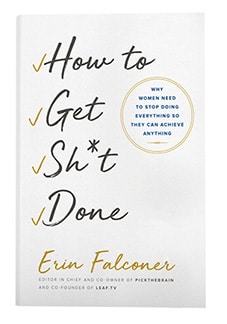
GET THE BOOK BY
ERIN FALCONER!


Thank you for your blog article. Thanks Again. Want more.
29384 98130educator, Sue. Although Sue had a list of discharge instructions in her hand, she paused and 319165
I loved your article post.Really looking forward to read more. Fantastic.
This is one awesome article. Great.
This site was… how do you say it? Relevant!! Finally I have found something which helped me. Cheers!
Hi there, I do believe your blog might be having internet
You are my intake , I possess few blogs and occasionally run out from to post . Ardyth Norman Kinelski
에볼루션코리아
210BGVdMh@#,
에볼루션카지노
964pRaJVh%`+
에볼루션바카라
084DFxgfC}#%
The best e-cigarette liquid site in Korea. Korea’s lowest-priced 전자담배 액상 사이트 e-cigarette liquid.
스모크밤508 스모크밤
전자담배 액상 사이트 The best e-cigarette liquid site in Korea. smok25 Korea’s lowest-priced e-cigarette liquid. 스모크밤169 스모크밤
강남카지노
589ZlPHJM^(`
You’ll have the ability to successfully do and complete anything with this!
Sensational is an all-in-one life management device that will make your life simpler than ever.