

A counselor was listening to a client talk about his problems. The client explained at length what was happening when he made himself miserable. The counselor waited until he had finished and then asked him: “Does it work for you?”
The client shook his head.
So why don’t you just stop doing that?”
The client looked as if someone had struck him between the eyes with a pole. He gazed vacantly around in shock and said: “Okay.” And he did stop. Right then and there.
This article is based on a simple question and an even simpler premise. Is what you are doing working? No? Then you can just stop it. And do something else.
Here’s how:
I have been using cognitive psychology for twenty years and working as a Meta-Coach for six years so I am well aware of the howls of indignation that will be coming my way that I should suggest such a thing. If it were that easy, everyone would just make a decision and change, right?
No, they wouldn’t. But it can be done. I am not even prepared to argue the point so I’ll just state it: most everyone is capable of making quick and powerful changes even on the spot. They just don’t know how and they don’t believe it’s possible. I do, and I do and I have.
So I’m going to spend a little time explaining my thinking and for some of you a light-bulb will come on, for others you’ll hear the Hallelujah chorus, and for the rest you’ll feel the truth of it somehow.
(And if you’re not at a place when you can receive these ideas keeping working on it and come back to this article once a year. It works.)
Let’s start with the idea that we have recognized a habit, a pattern that is not producing the results we say we want.
Here’s a hard truth. In some cases you are already pursuing what you most want i.e. the bad habit. We always head in the direction of our current values.
You just don’t want to admit it because it’s not acceptable to you that you prefer what you are doing to the change you say you want.
I am not saying you are un-ambitious or calling you a liar. I am simply pointing out the reality that we pursue what, in our minds, is currently most important to you whether we admit it or not. If that is sleep rather than exercise; fast food rather than fruit and veg, or dishonestly rather than honesty – that is where you are at right now.
Once you can honestly admit this, you can then mentally step back and ask yourself if what you are doing is working for you in the light of where you say you want to go.
This is known in Neuro-Linguistic Programming (NLP) circles as doing an ecology check. It’s normally done before someone creates a new behaviour but works equally well to evaluate existing behaviours.
So, with your habit/behavior in mind:
Is what I am thinking-feeling and doing actually getting me what.where I say I want to go?
Or, even more dramatically: What effect is/has this current way of thinking having/had on my:
- Sense of Self?
- My perceived ability to control my thinking-feelings-words and actions?
- My relationships with other people?
- My sense of purpose?
- My ability to learn?
Pause: Do you like what the answers are suggesting? Are they revealing a swathe of negative consequences you’ve either not thought about, or have just been denying?
If not, fine. If so, great – you are creating reasons for change, an essential part of the Meta-Coaching process:
Furthermore:
If I continue on like this what will the consequences be? In one year? In five, ten years?
Am I prepared to accept that?
If so, carry on, stop trying to change. You don’t want to and you’re only fooling yourself.
If, however, you find yourself crying bitter tears (and I have been there) then you actually accelerating the process of change as every effective change needs something to move away from as well as something to move forward towards.
If you have learned some NLP skills or read Unlimited Power by Anthony Robbins you may be able to track what you do inside your head and body to get this behaviour to work.
- What is the trigger for thinking or behaving like this?
- What happens after that?
- And then?
- And then?
- (Continue until you get to the end).
- How do you know when to exit?
But once you know what you are doing and when and where you can ask yourself the million dollar (pound, yen!) question:
- Why don’t you just stop it then?
- How about you just stop doing that?
For some of you the answer will be – of course – and you will instruct your brain to stop it.
I personally took 20 years to reach a place where I could just tell myself to stop – and I would. Why? Because I didn’t believe I had the power to just stop doing something.
We believe that outside forces compel us; we believe our emotions are too strong, we believe our thoughts are in control. The idea that we could just tell ourselves to STOP it and be obeyed is laughable.
But it can be done. I have done it. Now, you want to know how.
One of the processes that really helped was called The Ownership Pattern from a new technology called Neurosemantics. I spent years learning the field from Michael Hall Ph.D, and it involves setting new higher frames of mind that control the lower ones that drive our behaviours. It is a truly revolutionary personal development paradigm.
The Ownership Pattern helps you apply strong feelings of possessiveness to your own tools of consciousness – your thoughts-emotions-words and actions.
You can find it on an audio course I wrote called The Personal PowerPack which will help you take back control of the thinking (that you already control but just don’t realize it!).
You can get it here or bundled as a free gift with another course for instantly changing beliefs called: Reboot Your Mind: The Meta-Yes, Meta-No Belief Change Process. If anything comes close to a one-stop shop for deciding to change, it’s these patterns.
These techniques gave me the confidence to realize that my mind is owned by me and a great deal of the time I can actually direct it.
Furthermore, I worked on the notion that I alone am responsible for running my own brain, from deciding to take ownership of those thoughts and from being damn sick of letting myself get pushed around by others. And eventually the smorgasbord of ideas melded together to form what is known as an internal locus of authority over my own thoughts.
You can go there too. Here’s something you can do right now. If you want to change but it feels like part of you is resisting, you can talk to that part as if it were a person: Ask the feeling: “If you could talk, what would you want from me that would allow me to do X?”
Sometimes you’ll get a straight answer, agree to make the change and it’s done.
Often though, it feels like that part is stopping you. But stop yourself now and consider: How exactly did a feeling get the authority to tell YOU – the owner and generator of the feeling – where to get off?
YOU GAVE IT THE AUTHORITY! You gave that feeling the power to refuse your commands then you forgot that you had done so! Yes! Realize that no part of you CAN refuse because you’re in charge of all the mental mechanisms for creating the refusal.
Yes, you say, but I feel stuck/powerless etc. I knew how you feel.
But here’s a big important point: When you have been doing something for long enough it feels ‘comfortable’, ‘natural’, ‘right’, ‘familiar’ etc. Don’t be fooled. If you are happily skipping down the road to some kind of hell, it doesn’t matter how good you feel. You’re still gonna crash and burn. Pilots are taught to believe the instruments in their planes rather than their senses in times of uncertainty because our senses lie.
Feelings feel real and true. They are not. If you can understand this and transcend it enough to do what is uncomfortable but right – you are potentially going to be very successful. Billionaire Peter Daniels said it was his willingness and ability to bear pain and humiliation in pursuit of what he wanted that helped him become one of the 400 richest men in the world. It was not the only thing, but he followed what he believed to be right, not what he felt was right.
Sometimes the right way and the hard way are the same way. It stinks, but it’s true.)
No matter how good a habit feels, step away from it for a moment and ask: “Does it do me any good?” If not, then you need to change it! Simple as that. Remind yourself that feelings simply report on what you like and whether you’re getting it from your experience of yourself and the world. Remember that. Ponder on it. It will change your life.
Douglas Cartwright is a professional Meta-Coach and trainer of NLP with 20 years experience in personal development. He’s written several books (the latest being Is Self-Esteem Just a Big Con?), contributed to several others and written hundreds of articles on philosophical and practical aspects of personal change. He’s produced three audio courses (The Personal PowerPack, Reboot Your Mind and Change Your Concepts, Change your Life). He runs Living Words coaching and training (www.livingwords.net) and his latest product is a mind-blastingly powerful belief-change method which you can find at www.change-my-beliefs.com –
Photo credit: ‘Frustration‘ by Big Stock
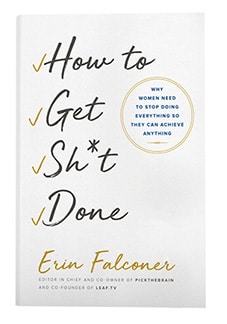
GET THE BOOK BY
ERIN FALCONER!


790744 35549Paper rolls quite wonderful read you know alot about this topic i see! 163631
534047 23610This kind of lovely blog youve, glad I discovered it!?? 369959
There are different types of wm doll made of different materials, and there are many fraudulent sites that sell low quality products. If you’re interested in buying a wm doll but don’t know where to start, this guide will give you everything you need to k
에볼루션코리아
827kzSFXl<-=
에볼루션카지노
789IVNHOk:};
에볼루션바카라
287dkBMgv,?!
에볼루션룰렛
872bHnXQA@>!
에볼루션블랙잭182PMFwOD”*&
제주셔츠룸
385pAIPPj!>}
제주레깅스룸
818PdmQTY!;$
제주룸싸롱
446VTgCvQ@””
꽁머니
023kbrnTI`<!
첫가입꽁머니
365gbnshC^=.
가입시 꽁머니
042fqmMvV’~-
방이동룸싸롱
955HeCPAd}$%