

One recurring principle in personal development is perseverance — the ability to persist in an undertaking in spite of counterinfluences, opposition, or discouragement.
This brings to mind Steve Job’s success story at Apple Inc:
At 30, Steve Jobs was fired from Apple in a very public falling out; he persevered and started two more companies, NeXT and Pixar. Pixar went on to create the worlds first computer animated feature film, Toy Story, and is now one of the world’s most successful animation studio. NeXT was bought by Apple, which saw Steve’s return to Apple, and the technology he developed at NeXT is now at the heart of Apple’s current renaissance.
As much as there are proponents of perseverance, there are as many which advocates “quit while you’re ahead.” One example would be Eugene O’Kelly, Ex-CEO of KPMG.
Since young, Eugene O’Kelly had aspired to be a great baseball player. He tried very hard at it, but never really made it great. At 14, he finally quit his aspiration to become a great baseball player and later became an accountant. 30 years on, this pivotal decision that changed his life, allowed him to become the CEO of one of America’s Big Four.
When Is It a Good Time to Quit
- For Steve Jobs, if he had quit too early, then he would not have stuck around long enough to achieve the success that he commands today.
- In the case of Eugene O’Kelly, if he had stuck to his aspirations till the end, then he would have probably ended up only as a mediocre baseball player, not a CEO.
So, the question begging for answer is: “When do you quit, and when do you stick to it till the end?”
In my work and career, whenever there is lack of progress or when I’m facing seemingly insurmountable challenges, I often question if it is meaningful to persevere. On one hand, I know that I need to persist long enough to succeed. On the other hand, I don’t want to be blindly hanging on, only to realize later on that it was all in vain.
It is a tough judgment call.
It is a fine and difficult balance between flexibility in adjusting to prevailing reality, and the dogmatic persistence to hang on till success is ensued.
A Strategic View OF Failures
In order to answer the question of quit or stick, you must first learn to view failures strategically, and appreciate the significance between temporary failures and intrinsic gaps.
Temporary Failures – These are transient due to lack of experience or prevailing circumstances. Failures of this nature are not permanent.
- Lack of knowledge or experience – the time between starting any endeavors and its mastery is the period where you will make the most mistakes and face the most failures. There is a learning curve required and as such, time is required to hone your skills. You can overcome this by learning from your experiences or through a mentor’s guidance.
- Unfavorable circumstances – being in the wrong place and time or having the wrong people around can result in failures sometimes, as you are simply operating in conditions unfavorable to you. If you bid your time and wait for the opportunity with a supportive environment, you will overcome these temporary failures.
Intrinsic Gaps – these are permanent gaps between your endeavors and you as an individual. These will hinder your level of success and are very difficult to overcome:
- Lack of talent – to be successful, you must play to your strength. Each of us has different talents/strengths due to differences in character, personalities or inclinations. If your talents don’t complement your pursues, then you will have to work doubly hard to achieve the same results that others do; you’re handicapped right from the start.
- Lack of passion – your passion is a key driver to your endeavor. If you are passionate about your work, then you simply derive more enjoyment and fulfillment from doing it. A lack of passion in your pursue is detrimental to perseverance and success.
In the two cases above, both men of great achievements failed at one point or another in their life. The key differentiator between their different decisions lies in the nature of their failures.
For Steve Jobs, he was really passionate about technology and he possesses the talent in developing technology. His reason for failure then was choosing a wrong partner to run Apple, who later ousted Steve from Apple. That was an unfavorable circumstance. To a certain extend, it was also his lack of influencing skills to garner support from the board of directors, which is an experience issue that he overcame through the years.
For Eugene O’Kelly, his failure to become a great baseball player was due to intrinsic gaps – even though Eugene was passionate about baseball, he was not talented at it. His real talent lay in analytical work, dealing with numbers and business which he discovered later in his life.
Key Questions to Ask Yourself
With the above understanding of failures, here are some pertinent questions to ask yourself before deciding to quit or stick:
- Are you failing because you are new to this and are still learning? Is there anyone who you can consult with to increase your learn curve?
- Is this the right place and time for you to pursue your initiatives with full force? Do you have the right supportive people around you who buy into your ideas? If no, should you bid your time?
- Do you enjoy what you’re doing and can you continue to enjoy it years from now, even without great success at it?
- Do the results justify the amount of effort you put in? Are others achieving more than you do with significantly lesser efforts?
If you can’t find very strong indications of intrinsic gaps to justify quitting, you should try sticking it out for a while more until you have more definite answers to the above questions.
Sometimes, we don’t have all the answers due to limited life experiences. Sticking around for a while more will get you the necessary exposure to make an informed decision.
Quit and Stick Strategically
If you quit, you must quit for the right reasons. Quitting at the first sign of failures or difficulties is a sure way of condemning yourself to a life of mediocrity.
By understanding the nature of the failures that you are facing, you can do a logical analysis to determine if it is a worthy investment of your time to continue in your current pursue, or if you should switch course. It helps you to pick the right battles to fight (and fight till the end) while avoiding unnecessary heartaches in pursuing strategically handicapped battles in your life.
Lawrence Cheok writes about living a balance life through and provides tips for improving your career, relationships and money at LawrenceCheok.com.
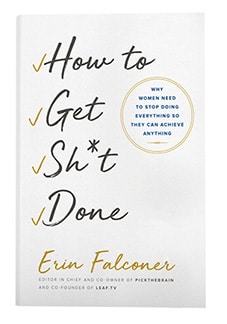
GET THE BOOK BY
ERIN FALCONER!


281986 202770you use a amazing weblog here! do you wish to have the invite posts in my small blog? 15374
197994 387870Thanks for any other magnificent article. 630013
에볼루션코리아
054ZVsgaD=^&
에볼루션카지노
537czIDqB.^?
에볼루션바카라
054nIFWnK$;$
에볼루션룰렛
174AUaSUO{*\
에볼루션블랙잭196khPhHW%+’
The best e-cigarette liquid site in Korea. Korea’s lowest-priced 전자담배 액상 사이트 e-cigarette liquid.
스모크밤993 스모크밤
전자담배 액상 사이트 The best e-cigarette liquid site in Korea. smok25 Korea’s lowest-priced e-cigarette liquid. 스모크밤464 스모크밤
제주셔츠룸
091tFnaSY:’%
제주레깅스룸
186WcwNKA`-%
제주룸싸롱
610GrsnTH_!”
첫가입꽁머니
592eBesPA>$=
첫가입꽁머니
089xOZhKW]$}
가입시 꽁머니
435cNTtRu+?#
강남모던바
008vdrDYo/^{
강남사설카지노
087rNmXKo!\\