

Life is full of contradictions. People say they want health food, but McDonalds still makes billions of dollars each year. People say they want to work satisfying jobs, but end up chasing after the biggest paycheck. People say they want news on world affairs, but tune into 24/7 coverage of Anna Nicole Smith.
I’m no different. I have plenty of contradictions between what I truly believe and how I behave. And I think anyone who says they don’t is lying to themselves. Practicing what you preach isn’t easy. It may be impossible to do it completely.
But even if you can’t escape the contradictions of modern living, you can lessen their impact. You can consult what you know to be true, and use that to guide you, instead of rationalizing your behavior and living a lie.
Cognitive Dissonance
Cognitive dissonance is a fancy psychological term for something incredibly simple: when people hold two contradicting ideas, their minds start to fry. This can be something simple like, “I believe health is important” and “I just finished eating a bag of potato chips.”
Your mind can’t handle the contradiction, as a result it has to go through one of two directions. The first is rationalizing: “I deserve the bag of chips, it’s been a hard day.” This is the easiest option, but it has long-term consequences. Eliezer Yudkowsky has said, “Rationalization is an odd word, because it has nothing to do with thinking rationality. It’s like calling lying ‘truthification’.” Whenever you start rationalizing a decision, you’re taken a shortcut that might make you feel better, but often ends in a poor choice.
The second option when you face a contradiction is to realize that one of the two ideas is false. Either your belief that something is true is mistaken, or your behavior was incorrect. Either you don’t believe health is important, or you shouldn’t have eaten that bag of potato chips.
I think this second direction is much harder to accomplish than rationalization, and why it’s easier to rationalize a mistake than it is to use that mistake to make changes.
Start With the Truth…
You can resolve a lot of personal conflicts by starting with a simple question: “What is true?”
Based on your personal experience and knowledge, ask yourself what is true. Answer this question before you factor in your current behavior. If you feel drinking or smoking is bad for you, recognize this first. You can worry about your habits later, the first step in fixing a contradiction always has to be with your current beliefs.
It’s important to recognize what is true, even if you’re powerless to change it. You might hate your job, but be completely financially committed to stay there. That’s okay, it’s better to know the truth of your position than to constantly lie to yourself that it isn’t so bad, or that work is supposed to be distasteful.
Resolving contradictions can be hard, because most people try to prevent any gaps in their behavior and beliefs. So if they can’t change their behavior, they sacrifice their beliefs, lying to themselves about what they know to be true. This is why separating the truth-acknowledging step from the behavior-changing step is so important.
…Then Fix the Habits
Once you fully acknowledge what you know to be true, you can start the process of changing your behaviors. This isn’t easy. Changing habits can be difficult, especially when the habit has been interlinked into much of your life.
It can be even more difficult to fix situations that are based on more than just behavior. A job isn’t just a habit, it’s also a financial commitment that can be difficult to sever, especially if you don’t have the resources to.
However, the job of practicing what you believe becomes infinitely easier if you have first acknowledged the truth of the situation. If you can realize the truth, you will eventually adjust your behavior and life to coincide with it–even if that is difficult at first.
Begin With Little Steps
I made the switch to a vegetarian diet three years ago after reading The China Study and similar books emphasizing the health and ecological benefits. (Don’t worry if you’re a carnivore, I’m not interested in changing your mind.) Before I made the switch, I still ate a lot of meat. As soon as I realized I believed it was healthier, and that health was important to me, I didn’t magically change. It took time to shift my behaviors and habits towards what I felt to be true.
The same thing happened when I first learned about running an online business. I didn’t immediately change all my plans and start building a business. It took time and patience to change my goals and even longer to succeed at it.
I think the most important step to fixing your contradictions is to realize you have them. Many people rationalize them away so there is never a gap between behavior and truth. Only the people who have gaps, the ones who aren’t living at their ideal capacity, are the people who can grow and improve.
If you perfectly practice what you preach, then you probably aren’t doing either very well.
If you enjoyed this article please vote for it on Digg and Stumble Upon. Thanks :).
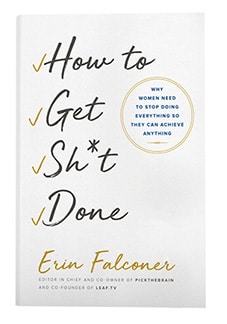
GET THE BOOK BY
ERIN FALCONER!


Muchos Gracias for your blog. Really thank you! Great.
viagra price comparison viagra for sale viagra cost
viagra price buy cheap sildenafil cheapest generic viagra
canadian viagra cialis tadalafil safe alternatives to viagra and cialis
viagra 100mg generic viagra without a doctor prescription where can i buy viagra over the counter
ed pharmacy canadian online drugs drug medication
viagra over the counter walmart buy viagra from canada best over the counter viagra
cheap generic viagra buy generic drugs cheap viagra
walmart viagra cheap viagra where to buy viagra
walmart viagra canadian pharmacy viagra cheapest viagra online
670949 185976You completed various very good points there. I did a search on the theme and discovered the majority of folks will consent with your blog. 345459
pharmacy online cheap ed pills ed natural remedies
vacuum therapy for ed cheap ed pills best natural ed treatment
buying pills online generic viagra what causes ed
natural help for ed male ed fast ed meds online
drug store online generic cialis ed drugs
drugs that cause ed buy prescription drugs cialis without a doctor’s prescription
cialis maximum dosage generic cialis where to get cialis sample
30 day cialis trial offer cheap cialis is cialis generic available
best ed medication canadian drugs online diabetes and ed
buy prescription drugs without doctor best ed pills ed medication online
sildenafil without doctor prescription sildenafil pharmacy
generic tadalafil tadalafil for sale
speedy cash payday loans online cash advance
payday loans no credit check instant approval personal loans for bad credit
instant online payday loans payday loans online fast deposit
best place to buy generic viagra online buy viagra generic roman viagra
645966 213792Great day. Really cool blog!! Man .. Superb .. Amazing .. Ill bookmark your web site and take the feeds additionallyI am glad to locate numerous helpful info proper here within the post. Thank you for sharing.. 524612
ed online pharmacy generic Doxycyline how to treat ed
viagra canada generic viagra buy real viagra online
generic viagra online for sale buying viagra online how much viagra should i take the first time?
ed meds online without doctor prescription canada online pharmacy treatment for ed
supplements for ed: vitality ed pills vitamins for ed
non prescription ed drugs: reasons for ed male ed drugs
zithromax prescription online can i buy zithromax over the counter in canada purchase zithromax online
generic for viagra how to buy viagra is there a generic viagra
over the counter viagra cvs buying viagra online viagra without prescription
buy cialis online cialis pills taking l-citrulline and cialis together
buy zithromax without prescription online zithromax for sale us zithromax online usa
otc ed pills buy cialis in canada online cure ed
zithromax 1000 mg pills zithromax prescription online buy zithromax online with mastercard
에볼루션코리아
689tuzLmC^?}
에볼루션바카라
126bJKGhW/^*
에볼루션룰렛
683ZJOXcO([‘
에볼루션블랙잭167JqpVdy?$,
에볼루션카지노
312zwRNMX_>.
에볼루션카지노
495Ltsttm<],
에볼루션카지노
837QGjtEW()~
에볼루션카지노
402pWlZvz,’_
강남카지노강남오프라인카지노,강남사설카지노 놀러오세요~이벤트진행~!!