

I recently had a conversation with a reader over the 30 Day Trial method. The idea, made popular by Steve Pavlina, is that you stay focused on one change for thirty days. After that, it becomes a habit and no longer requires willpower. It’s a technique I’ve used to start exercising, switch my eating habits, wake up early and add various other productivity routines.
Our debate centered around whether you should implement one 30DT (30 Day Trial) at a time, or several. According to this reader, life was short, and he wanted to do as much as possible in a small timeframe. He was asking advice on whether he should implement 3-4 trials at a time, or just one.
This isn’t the first time I’ve heard this question, or the first time I’ve seen the results. Usually someone who stumbles upon the 30DT gets it in their head to multiply the effects by doing several at the same time. After ten days of this insanity, they slip and end back where they started. Nothing changed and nothing gained.
Runaway Enthusiasm
The problem isn’t that doing several 30DT’s at a time is impossible. I’m sure with enough practice and motivation, you could do it. The problem is that doing several trials at the same time is overkill. It’s taking something fairly simple and making it incredibly difficult, just to save a month or two.
This is just one case of runaway enthusiasm, but I’m sure you know of others. Runaway enthusiasm happens when a new idea or interest fuels you with intense motivation. For about two weeks. Then that motivation dies out and you’re left with the wreckage.
For many people this cycle happens every time they start a new diet. It goes from:
- Hearing about the diet.
- Becoming intensely interested in the diet.
- Starting the diet.
- Crashing and eating a bag of donuts after ten days.
Enthusiasm is useful. Without motivation, you can’t get up in the morning. But with runaway enthusiasm, you aren’t able to control that extra energy. You bite off more than you can chew. Instead of locking in gains, you burn yourself out.
Focused Enthusiasm
The opposite of runaway enthusiasm is focus. When you have focused enthusiasm, you are motivated to take action, but you aren’t stupid about it. You’re aware that at some point, your motivation will fall back to normal levels. Instead of squandering your temporary energy, you need to anchor it in.
When you encounter a burst of motivation, your should try to secure it into something more permanent. Enthusiasm is like a spark. It’s powerful, but it burns out quickly. Unless you find some fuel to capture that temporary heat, it will fizzle out.
How to Anchor in Gains
You can anchor in any improvements by creating a plan. Making this plan can feel odd when you’re full of enthusiasm. It’s a bit like writing a will. It’s a plan for what you want done once the motivated you fades away. It’s a map for you to follow once the lights burn out.
In the movie Memento, a man has long-term memory loss that prevents him from remembering anything new. To record new details, he tattoos notes on his body to guide him. In a way, you are doing the same thing when you anchor in gains. You are writing notes to yourself about what to do when you forget why you’re supposed to be motivated.
Every plan will be different, but every plan should include both habits and a project.
Habits
Your first step should be to lock in behaviors. Practice your routines and actions consistently until they become rituals. A ritual can continue with you even if you lose temporary motivation.
The 30 Day Trial itself is a great way to lock in habits. Even beyond this method, you should be looking at how you can form rituals of common behaviors. You don’t want to ritualize things that need to change with different conditions. But simple rituals can anchor in the behaviors you need to continue.
Projects
A project is a set of tasks and actions that leads to a goal. Planning a project is a good way to anchor in your enthusiasm. A project is a clear commitment to a certain set of actions. Writing a book, setting up a blog, committing to the gym for 3 months or enrolling in a course are all examples of projects.
You can use your enthusiasm to make the push to get started. When starting projects it’s better to over-commit and under-promise. That means your commitment to finishing the project should be extremely high, while the promises of how the project will end up are lowered. Set an easier project with extra commitment.
Harnessing Enthusiasm
The best way to look at motivation is like a wave. You can make a splash to create a big wave, but it will eventually recede back to the starting point. By anchoring in the gains you make from a big wave, you avoid drifting backwards when it recedes. Enthusiasm is wasted if it isn’t focused patiently towards a bigger goal.
Image by Bill and Mavis.
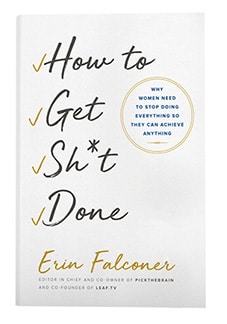
GET THE BOOK BY
ERIN FALCONER!


Aw, this was an extremely good post. Spending some time and actual effort to produce a very good article… but what can I say… I procrastinate a lot and never manage to get anything done. <a href="https://yourdoll.jp/product-tag/middle-breast-real-love-do
에볼루션코리아
272xrQSOu|_*
에볼루션바카라
519bEEzVb]:-
에볼루션블랙잭392ySKYjT,/:
The best e-cigarette liquid site in Korea. Korea’s lowest-priced 전자담배 액상 사이트 e-cigarette liquid.
스모크밤321 스모크밤
전자담배 액상 사이트 The best e-cigarette liquid site in Korea. smok25 Korea’s lowest-priced e-cigarette liquid. 스모크밤944 스모크밤
에볼루션카지노
646gRlfqU([*
에볼루션카지노
835dxlNwg)$<
에볼루션카지노
368ywzPir>,<
에볼루션카지노
148aAYWeF'(*
에볼루션카지노
540KRKaUs\>@