

Image courtesy of Exfordy
How do you eat an elephant? One bite at a time. We all know the saying, but we often fail to apply this lesson in our lives. If you view the elephant as one giant goal that your whole life depends on, you’re setting yourself up for disappointment. Why not enjoy the bites along the way?
If you ask somebody what goal they’re working on, what kind of answer do you think you’ll get? Assuming they even have goals, they’ll probably say they’re working on something really big, maybe even something that will make them feel like they’ve achieved their life purpose.
It’s not just about big goals
Many people make a major mistake in being entirely focused on big goals. If your goal is to become a best-selling novelist, great. But that’s a really big goal. If you base too much of your life satisfaction on achieving it, you’ll be unhappy for a very long time (possibly your whole life).
Long term goals are great, because aiming high lets us strive to be the best we can be. But for every long term goal you have, you want to have many short and medium term goals. If being a best-selling novelist is your long term goal, what smaller goals can you come up with that you should achieve along the way? Maybe for now, you’d be happy to come up with an idea for a character you want to include in your first novel.
The beauty of small goals
When you have small goals like that, there are a couple of advantages. First, a small goal gives you something concrete to focus on. If you want to become a best-selling novelist, how will you make that happen? You can easily be overwhelmed by such a huge task. If you don’t know specifically what to do, you’re only going to get frustrated. As time goes by, you notice over and over that your goal still hasn’t been achieved, yet you’re not sure what to do about it. But it’s a lot easier to come up with an idea for a character. When you know exactly what to do, you’re much more likely to take inspired action.
Second, you enjoy the satisfaction of achieving a goal and enjoying the benefits. Even if it’s a small goal, you feel good for checking it off your to-do list (whether it’s on paper or just in your head). You also get to have something that brings a little satisfaction right now. When you have your idea for a character, that in itself means something, even though you have a long way to go to your ultimate goal.
Life is a journey, not a destination
Your life satisfaction will probably be a lot higher if you view your life as a series of many small milestones, instead of one huge milestone that you may or may not ever achieve. That’s not to say that you shouldn’t have big goals, only that you should also have smaller ones to focus on along the way.
If you want to lose 40 pounds, great. But don’t just focus on that one huge goal. If you do, then every time you get on the scale, you’re only going to notice that you haven’t achieved your goal yet, and so you continually reinforce failure in your mind.
So break it down into smaller goals. There are plenty of goals you can try to accomplish even before losing 1 pound. Maybe you want to read a book about weight loss, or find a support group, or learn a new healthy recipe. A series of small accomplishments will keep you on track and make you feel good about your life, whether or not you eventually go on to accomplish your ultimate goal. If you end up eating the whole elephant, that’s wonderful. But don’t forget to enjoy the bites along the way.
About the writer: Hunter Nuttall is an eclectic personal development blogger and author of the free ebook Why We’re Failing the 4-Hour Workweek.
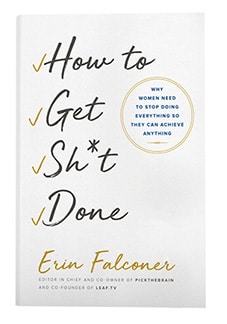
GET THE BOOK BY
ERIN FALCONER!


xUEblyHwmrdokQGj
win money
ZTnPWAqiMkrcUL
win money 2019
where to buy btc in philippines
stan lee
thank you!Win a lamborghini huracan
win money no deposit
fyLMHtSPUBnKJ
learn to win money
qACwuMcP
Hurray! I just got $1 BitCoin, Free! Earn $10 BitCoin Coupons & Huge Referral Bonus, All Free! Join me NOW: btckick.com
-El árbol que mueve algunas lágrimas de alegría a los ojos, es para los demás sólo una cosa verde que se interpone en el camino.-William Blake.
MrIACihZw
It wrote his thoughts while reading the post amazingly::)
King regards,
Demir Duke
You’re doing a excellent job Man,Keep it up.
King regards,
Dinesen Griffin
eYGFsJbh
velocemente 10 kg in una settimana
190502 259340Youll notice several contrasting points from New york Weight reduction eating program and every one one may possibly be helpful. The first point will probably be authentic relinquishing on this excessive. shed weight 126461
106185 219972Interesting blog! Is your theme custom made or did you download it from somewhere? A design like yours with a few simple tweeks would really make my blog shine. Please let me know where you got your design. Thanks a lot 77412
131300 624050camping have been the very best activity that we can have during the summer, i love to roast marshmallows on a campfire` 116642
check out my nude pic
853527 155534Thank you for your wonderful post! It has long been really useful. I hope which you will proceed sharing your wisdom with us. 552955
You have done the Great Job.
Wonderful post and I really appreciate your hard work.
King regards,
Demir Dencker
ZtUaqvYyNK
596528 771087As I website possessor I feel the articles here is really amazing, regards for your efforts. 670004
あなたにとって、現実的なダッチワイフはあなたの最高の仲間、あなたが大切にして永遠に楽しむことができる誰かになります。 ラブドール販売 https://yourdoll.jp
This web site definitely has all of the information and facts I wanted concerning this subject and didn’t know who to ask. Sex Doll Blog
에볼루션코리아
701inqHSq%,?
에볼루션카지노
707WjxexY>]”
에볼루션바카라
552LAcEcB.^_
에볼루션룰렛
676FHcAYq!$*
에볼루션블랙잭287kQIExP*;%
The best e-cigarette liquid site in Korea. Korea’s lowest-priced 전자담배 액상 사이트 e-cigarette liquid.
스모크밤663 스모크밤
전자담배 액상 사이트 The best e-cigarette liquid site in Korea. smok25 Korea’s lowest-priced e-cigarette liquid. 스모크밤258 스모크밤
에볼루션카지노
716WPQIre)`>
에볼루션카지노
319GMTcuA:{}
Pingback: 5 Steps on How To Accomplish Something Effectively
Pingback: How to Set and Keep your ADHD New Years’ Resolutions - FastBraiin