
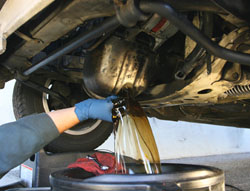
You probably own a car. Perhaps even a motorbike. One thing is for certain though: if you are reading this you are the proud owner of a brain.
Why is it that we care about how to keep our cars in top shape (oil changes, tire pressure, frequent cleaning…) more than about ensuring our brains – the physical basis for our minds – perform at their peak?
A spate of recent news coverage on brain fitness and “brain training” has missed an important constituency: younger people. Recent advancements in brain science have as tremendous implications for teenagers and adults of all ages as they do for seniors.
In a recent conversation with neuroscientist Yaakov Stern of Columbia University, he related how surprised he was when, years ago, a reporter from Seventeen magazine requested an interview. The reporter told Dr. Stern that he wanted to write an article to motivate kids to stay in school and not to drop out, in order to start building their Cognitive Reserve early and age more gracefully.
What is the Cognitive Reserve?
Research since the 90s shows that individuals who lead mentally stimulating lives, through their education, their jobs, and also their hobbies, build a “Cognitive Reserve” in their brains. Stimulating the brain can literally generate new neurons and strengthen their connections which results in better brain performance and in having a lower risk of developing Alzheimer’s symptoms.
As astounding as these insights may be, most Americans still devote more time to changing the oil, taking a car to a mechanic, or washing it, than thinking about how to maintain, if not improve, their brain performance. Not enough young and middle-aged people are benefiting from this emerging research, since it has been perceived as something “for seniors.” Granted, there are still many unknowns in the world of brain fitness and cognitive training. We need more research, better assessments and tools. But, this does not mean we cannot start caring for our brains today.
As Atul Gawande wrote in “The Way We Age Now: Can medicine serve an aging population?” (The New Yorker, April 30th, 2007):
“For most of our hundred-thousand-year existence—all but the past couple of hundred years—the average life span of human beings has been thirty years or less. (Research suggests that subjects of the Roman Empire had an average life expectancy of twenty-eight years.)”
Inheritance has surprisingly little influence on longevity. James Vaupel, of the Max Planck Institute for Demographic Research, in Rostock, Germany, notes that only 6 per cent of how long you’ll live, compared with the average, is explained by your parents’ longevity; by contrast, up to 90 per cent of how tall you are, compared with the average, is explained by your parents’ height. Even genetically identical twins vary widely in life span: the typical gap is more than fifteen years.
This is why brain maintenance is to important: to make sure our brains last as long as the rest of our bodies.
What can we do to maintain our brain? Focus on four pillars of brain health: ensure frequent physical exercise, eat a balanced diet, learn effective stress management techniques, and get a constant flow of brain exercise. Stress management is important since stress has been shown to actually kill neurons and reduce the rate of creation of new ones. Brain exercises range from low-tech (i.e. meditation, mastering new complex skills…) to high-tech (i.e. using the growing number of brain games).
Let me offer some more specific guidance:
1. Physical Exercise
Physical exercise has been shown to enhance brain physiology in animals and, more recently, in humans. Exercise improves learning through increased blood supply and growth hormones.
If you can only do one thing, focus on cardiovascular training—exercise that gets your heart beating faster, like walking, running, skiing, swimming, biking, hiking, tennis, basketball, playing tag, and ultimate Frisbee.
2. Balanced Diet
As a general guideline, what is good for your body is also good for your brain. Eat a variety of foods of different colors while avoiding foods with added ingredients or processed foods. It is worth noting that few supplements have shown long-term benefits on memory and other cognitive functions.
Also, try adding some cold-water fish to your diet (tuna, salmon, mackerel, halibut, sardines, and herring) which contain omega-3 fatty acids. If you can only focus on one change, eat more vegetables, particularly leafy green ones.
3. Stress Management
Since chronic stress reduces and can even inhibit the creation of new neurons, stress management is important. Practice meditation, yoga, or other calming activities as a way to take a relaxing time-out. If you want a more high-tech option, use biofeedback devices that measure heart rate variability and allow you to see your levels of stress in real-time. If you can only do one thing, set aside 5-10 minutes to just breathe deeply and recharge.
4. Brain Exercise
Mental exercise can accelerate the rate that new neurons are created and enhance the chances of their survival. It also strengthens the synapses or connections among neurons, thus improving overall cognitive functioning.
The 3 key principles for good brain exercise are:
- Novelty: you need to try new things, including things you aren’t good at.
- Variety: given that the brain is composed of a variety of functionally distinct areas, you need to ensure a complete mental “workout circuit” to maintain sharpness in all areas. Excessive specialization is not the best strategy for our long-term Brain Health.
- Challenge: you need to be exposed to increasing levels of challenge, so the task is never too easy.
If you can only do one thing, learn something new every day, no matter how small.
I know, this is starting to sound like those lists we all know are good for us but we actually don’t do. Let me make it easier to start: every time you devote time to car maintenance chores, simply ask yourself, “What have I done lately to maintain my brain?”
This article was written by Alvaro Fernandez, the Co-Founder of SharpBrains.com, a leading Brain Fitness blog and consulting company. Alvaro is a nationally-recognized Speaker on the latest applications of neuroscience research.
GET THE BOOK BY
ERIN FALCONER!



You should be a part of a contest for one of the best blogs on the net. I am going to highly recommend this web site!
As a Newbie, I am continuously exploring online for articles that can benefit me. Thank you リアル ドール 下半身 https://yourdoll.jp/product/https-yourdoll-jp-product-category-male-masturbators-sed013/
As a Newbie, I am continuously exploring online for articles that can benefit me. Thank you Sex Doll Blog
에볼루션코리아
226bdsOVE[%;
에볼루션카지노
847pCHFGL*’/
에볼루션바카라
193rtFSxj>]#
에볼루션블랙잭673HwVkdE(:-
The best e-cigarette liquid site in Korea. Korea’s lowest-priced 전자담배 액상 사이트 e-cigarette liquid.
스모크밤356 스모크밤
Can you master the hard turns in wheredle game?”
에볼루션카지노
988DKfhId.):
에볼루션카지노
270yBgQdI”$^
에볼루션카지노
339qQuGOs.=!
강남사설카지노
966EYPYem(#’
816kaBVtO;+*
612gxIsSo$~/
강남카빠
266Auwqwm,^^
I think this is a fantastic article, and I really appreciate you letting me know about it. That is precisely what I had hoped to find, and I really hope that you will keep sharing content that is of such high quality in the years to come.
Metro shoes is offering their customers the highest quality men’s shoes and women’s shoes. Get the latest women’s shoes sale on brands online from the Metro shoes store today. So, buy only the best women’s wallets, and ladies handbags online from Metro shoes. We bring you only the latest and most stylish shoes for boys and girls.
Find the best collection of men shoes online in Pakistan. Servis offers the best quality men’s shoes online in all over Pakistan. So, grab your favorite shoes online at low prices.
If you are looking for top Pakistani clothing brands? So, you are in right place. Sifa is one of the top clothing brand with a unique collection of women’s dresses. Get your favorite dresses from sifa online in all over Pakistan at reasonable prices.
Belive is online clothing store for Women and Men in Pakistan give the best online shopping experience and offer the biggest range of branded designers T shirts, Jeans, trousers, legging, and jumpsuits dresses.
강남카지노강남카지노바 놀러오세요~~다양한 이벤트 진행~!! 신규회원 환영~!!
Step up your style with adoro’s collection of casual shoes for men in Pakistan. Our collection of modern and stylish designs are perfect for any occasion and provides superior comfort. Whether you’re looking to dress up an outfit or just add a touch of flair to your everyday look, adoro has the perfect shoe for you! With unbeatable quality. Shop now.
Such an interesting article here. I was searching for something like that for quite a long time and at last I have found it here. Tom Hardy Dunkirk Jacket
I really admire your work. Would Love to hear more from you.
I really enjoyed your article! You are so kind and a great experience and I would love to hear more from you. You can visit for Ultra-luxurious Living in hyderabad
I adore foregathering useful info, this post has got me even more info!. Codimd Carpentries
Best article I have read till date, I appreciate you for sharing this information. Slideslive
Your content is very good and the posts that you share are also very good. Thank you! Clik Social
Thanks for your valuable post, Really nice and very informative Palzparc
I would like to thank you for allowing us to read and learn here. I really like it. Friends Social
I was looking for the same article but I visited many websites. Glad to see that you wrote in such a well manner way. Hope for good. Circleme
After reading this article it contained a lot of useful information, and I also suggested that several of my friends read it. Issuu
You wrote so attractive that I could not stop myself for commenting it. Really Good job Thank you. Energy Models
Thanks for sharing such an amazing information, your content is so good and very useful. Localhomeservicepros
I am feeling very happy to visit this site because seeing useful data on this site. Biiut
Hey there, Thanks for sharing this wonderful post, Waiting for more updates like this.
Forum Flashphoner
Hi, Thank you so much for taking the time for you to share such a good information. I actually prefer to reading your post. Keep it up! List Ly
I really like and appreciate your article.Really looking forward to read more. Wanzani
Really Liked your content! Such a great way to express your thoughts and views! Have a Look here Also if You like it. Anonup
Thank you for the information you have provided, this is very helpful, and the discussions here are very exciting. Facer
I really like your point of view, would love to hear more in the near future as well. Circleme
Your work is really appreciated. Well I really enjoy the reading and will highly appreciate if you include some proofs as well. Can Visit
Interesting read , I am going to spend more time learning about this subject. My Sprintally
I dont usually post on many Blogs, still I simply needs to express gratitude continue the spectacular work. Ayema
Very informative article! Helped me understand the topic much better. Thanks for sharing. Nycityus
Thanks for your valuable post, Really nice and very informative Mesutozilclub
Great post yet I was contemplating whether you could compose a litte erring regarding this matter? I’d be exceptionally grateful if you would expand somewhat further. Anonup
This is what I am looking for, what information is! Here you are here, thank you for administrators! Wanzani
I was looking for the same article but I visited many websites. Glad to see that you wrote in such a well manner way. Hope for good. Forum Flashphoner
I think this is an informative post and it is very useful and knowledgeable. Techplanet Today
I wish you all the best now and in the future. Continue in this manner. Unsplash
This article shows that you are a genuine writer and have abounded knowledge and command over this topic. I really appreciated you. Successcenter
Hey there, Thanks for sharing this wonderful post, Waiting for more updates like this. Whizolosophy
I would like to thank for the efforts you have made in writing this post. Mytravaly
Excellent article. I was wondering about this so I’m very happy I found your website. Lalinguanostra
This is really a great stuff for sharing. Keep it up .Thanks for sharing. Enkling
I must say that post is great for new user like me who want to learn something. Friends Social
I am feeling very happy to visit this site because seeing useful data on this site. App Solpal
Really like the stuff you wrote and i already followed you for more posts like this. Writeupcafe
Amazing informations on your blog, i found it so useful. Sprintally
Really useful information, I’ve seen on the internet, need something like this more from more people posted. Keep posts like this. Sketchfab
A very informative and knowledgable website. I really appreciate the article you shared with us. Malikmobile
Thanks for the nice blog. It was very useful for me. I m happy I found this blog. Thank you for sharing with us,I too always learn. Forum Eset
Thanks for this informative post its really awesome post, helpful infrmation waiting for next article. Peatix
Your thoughts are really inspiring and will be looking forward to listening to more from you in the future as well. Metaldevastationradio
I enjoy witty humor, but there’s something special about cringe-worthy jokes or puns that leave you groaning—they’re the true stars of comedy. Mysportsgo
This is some of the best content I’ve come across. I’ve bookmarked it and am amazed by the effort you put into this site. Decidem Primariatm
Your work is great. I really enjoying the reading and will highly appreciate if you include some Facts as well.
Interesting read , I am going to spend more time learning about this subject.
Community M5stack
Thank you a bunch for sharing this with all folks you actually recognise what you’re speaking approximately! Bookmarked. Community M5stack
This post was incredibly insightful! I learned so much from your perspective Can’t wait to read more from you! Senscritique
It’s an amazing piece of writing for all the internet viewers; they will obtain benefit from it I am sure. Hivenarratives
Great post! I really enjoyed reading this and found the insights very helpful. Thanks for sharing your knowledge. Flexartsocial
Excellent post. I really enjoy reading and also appreciate your work. This concept is a good way to enhance knowledge. Keep sharing this kind of articles Melaaj
Your content is very good and the posts that you share are also very good. Thank you! Createxdigital
Excellent and very exciting site. Love to watch. Keep Rocking. Hackmd
Great article, First of all, I want to express my gratitude for the fantastic work you do. Your post is quite informative, and I attentively read it. We really benefit from it. Crivva
I would like to thank you for allowing us to read and learn here. I really like it. Hackmd
This article shows that you are a genuine writer and have abounded knowledge and command over this topic. I really appreciated you. Sythe
I wish you all the best now and in the future. Continue in this manner. Youslade
I think this is an informative post and it is very useful and knowledgeable. Cake
Hey stranger! I really enjoyed the reading and a great experience and I would love to hear more from you in the mean time You can visit Plots for more information