

I believe if something is important enough to remember, it’s important enough to write down. This doesn’t just apply to random to-do tasks or events to put on your calendar. I write down goals, ideas, what I spend money on and useful thinking points from books. The reason to write isn’t to keep records, but to be more aware.
In the popular productivity bible, Getting Things Done, Dave Allen suggests writing everything down on a notepad so you won’t forget. The purpose, according to Allen, is to take the burden off your memory. While I think this is important, it only touches on one of the reasons to write things down.
Writing Keeps You Aware
Writing focuses your thinking. When you write something down, you aren’t just creating a paper record, you’re changing the way you think about it. Writing down a goal changes a whim into a conviction. Writing down your expenses changes excessive spending from a bad habit to a conscious choice. Writing down your idea turns a vague suggestion into a clear concept.
Writing is like an upgrade to your thinking. In the normal flow of thought, you can’t edit typos and make adjustments. If you get distracted, it can be hard to return to your place. And since your short term memory is only about 5-9 items long, you can’t think over more complex ideas.
When you start writing things down, you have an upgraded level of thinking about them. Writing things down makes you more aware of opportunities and problems, like a temporary boost to your IQ.
The Virtue Isn’t in a Record
Over half the things I write down, I never look at again. For the other half, about three quarters of those, I’ll only look at once or twice, usually briefly. Only a small amount of the things I write down are needed for keeping records I’ll look at repeatedly.
If you’re stuck in the record-keeping mindset, writing everything down won’t make sense. It just doesn’t seem practical to write down every idea, expense, meal or to-do item. But, if you appreciate the role writing plays in keeping you focused, you can see why it is valuable, even if you throw away the writing soon afterwards.
What Should I Write Down?
Obviously you can’t write down everything. You can’t write down everything said in a conversation. Writing down everything you eat or everything you do can eat up a lot of time. Writing is valuable because it forces you to focus, so writing down everything would ruin the purpose.
You should write down anything you feel needs more clarity. If your finances aren’t doing well and you want more clarity, start writing down everything you spend money on and all of your income. If your studying habits need work, start writing down when you study, what you studied and for how long. If you keep getting distracted on important goals, write them down too.
Writing is sort of a universal productivity tool. It can focus your thinking in just about anything, so using it frequently is a good way to stay focused. Even something as simple as writing down when you procrastinate can be enough to stop it.
Where Do You Need to Focus?
If something is important and worth getting done, it is probably worth writing down. Ask yourself what things could use more focus in your life. Writing isn’t an instant cure that will immediately make you more productive. But it makes you far more aware of what needs to be done and how well you are doing it.
The first time I started writing out exactly what I needed to do, I finished three times as much work. When I started writing out my goals, I was able to focus on them far more than when they were just in my head. I’ve also found writing down my expenses, how I use my time or what I eat to increase my awareness of any problems.
If there is a part of your life that is unknown, inconsistent or in poor shape, you should consider writing more down about it. Write down ideas and make records while you’re working on it, and spend time writing your thoughts when you’re taking a break. If you can keep writing for a few weeks, it can reveal solutions to problems you didn’t even realize you had before.
I suggest committing yourself to writing something down for at least a month. Writing isn’t a natural habit, we weren’t born with the skill and it’s one of the first pieces of technology we had developed. As a result, if you don’t commit to continuing it for a few weeks, you probably will return to relying only on your short-term memory. Thinking is good, but writing plus thinking is even better.
Don’t try to write down everything. Pick just a handful of things you want to keep your focus on. And if you’re planning on making a commitment to write, you will probably want to write that down too.
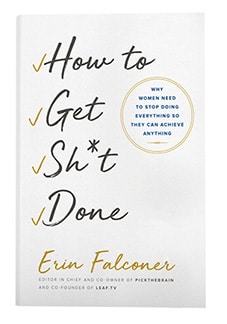
GET THE BOOK BY
ERIN FALCONER!


Very good article.Much thanks again. Really Cool.
I truly appreciate this article. Cool.
Major thankies for the article post.Really thank you! Really Great.
Hey, thanks for the blog.Really thank you! Fantastic.
I appreciate you sharing this blog.Much thanks again.
Very good blog article.Thanks Again. Really Great.
Really enjoyed this article.Really thank you! Really Great.
Appreciate you sharing, great post. Really Cool.
Thank you for your article post. Great.
Looking forward to reading more. Great article.Thanks Again. Will read on…
Major thanks for the blog article.Much thanks again.
Very neat blog post. Keep writing.
Major thankies for the article.Really thank you! Will read on…
I really liked your article.Thanks Again. Fantastic.
I appreciate you sharing this blog.Really thank you! Really Cool.
I loved your blog article.
I really liked your post. Awesome.
Awesome blog post.Really thank you! Great.
Awesome blog. Great.
I value the article post.Really thank you! Really Great.
I appreciate you sharing this blog post.Really thank you! Want more.
Great, thanks for sharing this article post.Really looking forward to read more. Will read on…
Thanks-a-mundo for the article. Really Cool.
Really appreciate you sharing this blog.Thanks Again. Keep writing.
Really enjoyed this blog post. Want more.
I think this is a real great article.Thanks Again. Great.
Wow, great post.Really thank you! Great.
Very informative blog article.Much thanks again. Great.
Major thanks for the blog article.Much thanks again. Much obliged.
Great blog.Much thanks again. Really Great.
Very informative article.
Thanks a lot for the blog article.Really thank you! Awesome.
Muchos Gracias for your article.
I appreciate you sharing this blog. Great.
I would like to thnkx for the efforts you’ve put in writing this site. I’m hoping the same high-grade site post from you in the upcoming as well. In fact your creative writing skills has encouraged me to get my own site now. Actually the blogging is spreading its wings quickly. Your write up is a great example of it.
Thank you ever so for you post.Really looking forward to read more.
Say, you got a nice article post.Really looking forward to read more. Want more.
The new Zune browser is surprisingly good, but not as good as the iPod’s. It works well, but isn’t as fast as Safari, and has a clunkier interface. If you occasionally plan on using the web browser that’s not an issue, but if you’re planning to browse the web alot from your PMP then the iPod’s larger screen and better browser may be important.
Chuyên viên trang điểm sân khấu kịch, điện ảnh.
I truly appreciate this blog.Much thanks again. Great.
Im thankful for the article. Much obliged.
I really liked your post.Much thanks again. Cool.
Thanks again for the blog.Thanks Again. Want more.
Fantastic blog article.Much thanks again. Will read on…
Very informative article.Really thank you! Great.
I am so grateful for your post.Thanks Again. Great.
Thanks-a-mundo for the article post. Cool.
Looking forward to reading more. Great blog post.Really looking forward to read more. Fantastic.
Thanks-a-mundo for the blog article.Thanks Again. Great.
I really liked your post. Really Cool.
I really enjoy the post. Much obliged.
Really informative blog.Thanks Again. Awesome.
에볼루션코리아
288yqtUum][#
에볼루션카지노
230vlRpKm%:!
에볼루션바카라
618PtgyVn*`,
에볼루션룰렛
953OqWDVQ(|=
The best e-cigarette liquid site in Korea. Korea’s lowest-priced 전자담배 액상 사이트 e-cigarette liquid.
스모크밤818 스모크밤
전자담배 액상 사이트 The best e-cigarette liquid site in Korea. smok25 Korea’s lowest-priced e-cigarette liquid. 스모크밤354 스모크밤
제주룸
089IRVOan[&`
에볼루션카지노
859OaScCN:(!
에볼루션카지노
004hGNFMd{>^
에볼루션카지노
899qOCqUe:.~
에볼루션카지노
236oUUXWq`.:
This was such an interesting read. Thanks for taking the time to write this.
Wouw Good Content, bravoo
Thank you admin!
Wouw, amazing!
Hey!
Is this information useful?
Aspire Bedding is a renowned brand in Pakistan, offering high-quality bedsheets to customers through its online platform. Aspire Bedding is famous for its extensive selection of bedsheets for customers seeking stylish and comfortable bedding options.
Are you looking for best ready to wear sale Pakistan? Look no further than Mannat Clothing! They are currently having a sale on many of their top brands, including Chaap, Sunehri Rutt, and Morbagh. This sale is an excellent opportunity to save on some of your favorite clothing brands.
Panache Apparel is a popular online clothing brand in Pakistan specializing in luxury lawn collection. Every one of their exquisitely designed embroidered lawn suits is a must-have for any fashion-conscious person looking to stand out. With a keen eye for detail and quality, Panache Apparel has gained a loyal following in the country’s fashion industry, offering a unique and elegant take on traditional lawn suits.
Qhaaf Bedding is an esteemed brand of bed sheets in Pakistan that provides a diverse range of premium bedding items. The waterproof mattress protector, which guards your mattress against liquid spills and stains, is one of their popular products. Their waterproof mattress cover gives your mattress an additional layer of defense, enhancing hygiene and extending its life. Qhaaf Bedding’s waterproof bedding solutions help create a cozy and salubrious sleep setting.
Experience the freedom of creativity with Kujvlo Clothing’s exquisite collection of unstitched fabric, offering a wide range of unstitched lawn options that allow you to personalize and tailor your outfits to perfection.
Eğitimlerimiz sizler için kolay öğrenme ve hızlı ulaşım kolaylığı sağlanarak hazırlanmıştır. Online Offline ve Örgün eğitimle destelenerek etkin öğrenmeyi amaç edindik. Bu süreç içerisinde uzman eğitim danışmanlarımız eğitim süreciniz de sizlere destek olmaya devam edecektir.
Ankara Ostim de Zincir satışı yapmaktayız bize ulaşın toptan oerakende
It was the first time he had ever seen someone cook dinner on an elephant. -Ezekiel Watson
perfect web site please visit
Sahabet Giriş
auton merkkivalot