

I believe it is important to separate good failures from bad failures. Good failures happen when, even though you made the correct decision, you still lost. Bad failures happen because you made bad decisions, or worse, didn’t make a decision at all. Although the two feel the same, they have a completely different long-term impact.
I’m a novice poker player. One of the first things I learned was that there were good wins and bad wins. Good wins were because you had a sound strategy of betting where the odds were in your favor. Bad wins happened when you just got lucky. Going all-in on a 2-7 off-suit might win the hand. But it doesn’t mean you’re a good poker player.
Good Failures
Mentally separating good failures from bad failures takes work. Poker is a simple game where the laws of probability are cleanly defined. Real life is a lot messier. It takes more effort to decide which failures were because of a bad decision and which were just the unintended side-effects of the best choice available.
Although it can be difficult to separate the two, there are benefits to making two piles instead of just one. By separating the two types of failures, it is easier to persevere through good failures. It may hurt to have your business proposal shut down for the fifteenth time, but it isn’t necessarily a bad failure.
By separating the two, you can also avoid more bad failures. If you fail because of laziness, indecision or poor planning, you can quickly correct those in the future. Knowing the difference between good and bad failures keeps you from repeating stupid mistakes.
Types of Good Failures
I’ve found that there are several categories of good failures. These are the kinds of failures you might actually seek out. Since they come from good, not bad, decisions, they are the best way to fail.
1. High Upside, Low Downside
There are many areas of life where the upside is far greater than the downside. When I write an article, it takes about 90 minutes of work. If nobody comments or responds to that post, then I’ve just wasted 90 minutes.
However, if the article becomes popular, it can bring in thousands of visitors to my website. Those thousands of visitors translate into new readers who can get value from the website. In addition, the extra traffic often results in a higher monthly income for me.
Writing blog entries is an example where failure is cheap and winning can be huge. I’d gladly take a dozen or two dozen failures for a big hit. A post that doesn’t get attention is a good failure.
2. Breaking Through Your Limits
The only way you can know your limits are to go past them. Occasionally I’ve committed myself to more work than I can handle. The result is stress and, in extreme cases, complete burnout. Doing more than you can handle on a regular basis is a recipe for a nervous breakdown.
However, if you don’t test those limits and occasionally go past them, you can never improve. You’ll always go slightly below your capacity, never reaching your possible potential. I don’t enjoy an exhausting schedule, but occasionally facing one ensures my productivity muscles stay strong.
3. Embarrassment and Smart Risk-Taking
There are some situations where failures and successes can’t be separated. There is no action that will guarantee you only get success. In these cases, it can be useful to ignore the losses since the wins will make up for it.
Public speaking is a great example. Any chance you get to speak in public runs you the risk of embarrassment. You might say something stupid. The audience might not like your speech. But if you don’t face those failures, it’s impossible to deliver a fantastic speech.
4. Staying Inside Your Comfort Zone
The only way to have a bad failure is to stay put. If you are constantly experimenting and pushing beyond your daily routine, any result is a good result. Avoiding the things that scare you doesn’t make you safe, it makes you weaker.
Over a year ago I took dance classes. For a self-proclaimed geek, this was definitely a step outside my comfort zone. I loved the class. Even though it was outside of my comfort zone, I had a great time and learned something valuable. This wasn’t a failure, but it just as easily could have been. It’s better to discourage laziness than occasionally stumbling.
5. Taking on Too Big a Challenge
More than a few times I’ve set goals that were nearly impossible to accomplish. I didn’t have enough time to reach the deadline and I had no idea what I was doing. Although setting extremely difficult challenges results in a lot of failures, it keeps you sharp.
The ideal challenge level is where success is possible, but only if you work incredibly hard. Unfortunately, finding this sweet spot means you’ll end up making some goals too hard and others too easy. If you never fail at a big challenge it probably means most of your goals have been set too easy.
Just as there are good and bad failures, there are good and bad wins. I’d rather have a good failure than a bad win. A bad win might feel nice in the short term, but it is damaging over the big picture.
Do you have a personal example of a good failure? Please share it in the comments below.
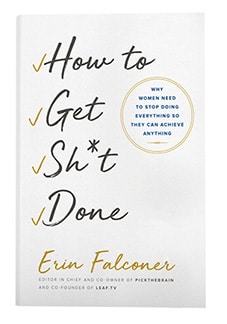
GET THE BOOK BY
ERIN FALCONER!


あなたにとって、現実的なダッチワイフはあなたの最高の仲間、あなたが大切にして永遠に楽しむことができる誰かになります。 中国 製 ラブドール
I agree, we all create our own luck, which is why I try to gather as much information is possible for my betting activities. For example I can easily see the latest scores and determine which teams are more likely to win. This helps me win a lot of my bets and have a great online income, so I’m living my dream life.
I just love football, but I am not always comfortable watching matches because of work. I also love to bet on football and make money. In my opinion, this is a great way to generate additional income. If you are new to sports betting try https://livescores.biz, it will help you with teams and their analysis. There is a very simple registration system that will not take much of your time.
에볼루션코리아
373TkNaxR,=\
에볼루션카지노
123fuGRuv=*\
에볼루션바카라
326HHgbhr?+”
에볼루션블랙잭069tSSATv;##
The best e-cigarette liquid site in Korea. Korea’s lowest-priced 전자담배 액상 사이트 e-cigarette liquid.
스모크밤830 스모크밤
전자담배 액상 사이트 The best e-cigarette liquid site in Korea. smok25 Korea’s lowest-priced e-cigarette liquid. 스모크밤335 스모크밤
에볼루션카지노
878QtUSrp’%{
에볼루션카지노
117dGsvGu,&|
강남카빠
644sivOCk_.]