

In a previous article An Article for the Never Wrong I wrote about what a relief it was to stop trying to be right all the time and enjoy being human and fallible.
But that’s not the end of the story…
At the other end of the scale there is the question of what you do if you feel like you’re always wrong, or at least if you have what is called an ‘accused personality’ – if something goes wrong it’s always you’re fault. Or if someone has a strong different opinion to yours, you defer to them.
You can work out for yourself where it started. Perhaps you could do no right at home. Perhaps you experienced bullying at school for looking or sounding different and you came to assume that there was something wrong with you. It was then easier to keep the peace and agree with the crowd.
It’s not the easiest subject to write about because there are so many different reasons people feel this way.
But there are some generalizations that can help explain what is going on and some principles you might want to chew on, and apply to a situation of your own.
First, let’s take a scenario: You don’t want to hurt someone’s feelings. This is a normal response – but what if it is for their own good? What if in order to stop you getting dragged into a situation you don’t want to be in, you have to say something that will upset them?
I think that for some of you the first answer that comes to mind will be “tough on them”. But for those who wrestle with their inner UN observer (they want to say something but feel legally bound – or just psychologically bound! – not to get involved) this article might offer some clues to end the inner war.
So what goes on when you are in a situation that might involve conflict, confrontation or just plain disagreement?
For some people they have a radar out which is always checking to see if something is being said about them. It may be pure ego, it may be that they never learned that other people’s needs count as well – or it may be because they are anxiously listening for something that might hurt them (which if you think about is a completely illogical stance).
This is called personalisation – and if you relate to the above it may be hard to hear but is everything REALLY about you? If you take a big psychological step back – it can’t ALWAYS be your fault. It just can’t. I’m not being nasty, I’m asking you to seriously consider this.
You might also be acting in an over-response-able way. Take a sheet of paper and draw a stick figure in pencil on the left and the right. Put a circle around each figure. The figure on the left represents you and on the right, the other person. Take your finger and touch the end of your nose. You’re responsible for everything under that finger.
Now, erase the circle around you and draw an oval encompassing you AND the other person. That is being over-response-able, acting like you are responsible for the reactions and actions of the other person.
Now, to be fair, our English language can take some of the blame for this.
“You make me so mad”
“When you said that I felt sad”
“You’re the one who caused the bad feelings!”
We have a cause-effect structure in our speech that makes it seem like one person can actually reach into another and make, force, cause-effect them to react in a certain way. As in “you really push my buttons”.
But if you consider people who have not confessed under torture then it seems evident that even with the branding, finger-nail pulling and beatings – THAT person refused to let their buttons be pushed. So it can be done.
In therapy circles this state of mind is called co-dependency. I prefer to be more charitable and called it over-extending personal boundaries. In either case, you need to draw back and be responsible for just your responses. This doesn’t mean you stop caring for other people. It means you stop trying to protect them from their own thinking so they can learn to be response-able and responsible for themselves.
If you think about it, two of the main issues here are authority and ownership. Who has the authority to decide if you have got something right or wrong? Or if YOU are wrong? Answers on a postcard please because I know you know this.
The issue of ownership comes in because you might be refusing to own any opinions of your own due to the perceived consequences. I certainly did this. Because I thought other people had the power to hurt me I tried to gentle’ things along by agreeing with them unless I thought it was ‘safe’ to disagree. That was no way to live.
In fact, I developed a number of new NLP patterns to aid me in working through this and you can get them here in the NLP/NS User’s Toolkit.
One thing I find really helpful is to research ideas and beliefs from people you know (and don’t know) who have stood up for their rights, opinions etc. Whether it be grandma or Martin Luther King doing this makes you realise that it’s your thinking that must be wrong, not you.
One of the hardest things to realize is that you can challenge the way you feel and you need to do so aggressively. Because our minds reinforce what we already believe it takes a certain amount of emotional energy to have a ‘breakthrough’. To attain this you will need to ask yourself a lot of questions. Passionately.
- Is this really working for me?
- What is the price I have already paid for using these beliefs and styles of thinking?
- What’s is it going to cost me?
- Who have I hurt?
- Who have I let hurt me and blamed them?
- How much longer can I sustain this?
- How much longer am I prepared to keep doing this to myself?
The bottom line is that you need to decide: is it good for you to keep doing this?
I won’t deny that doing the self-analysis required can be time consuming. As a Meta-Coach, I can help people get to the root of these issues often faster than they can themselves. But if you don’t have the time, money or inclination to work with another then there are some good books to start with such as Feeling Good: the New Mood Therapy.
As for me I can report than learning how to re-own my own thinking and feelings in certain has brought an increase in confidence and motivation. I can only encourage you on to do the same.
Douglas Cartwright is a breakthrough and personal effectiveness Meta-coach who helps professionals get unstuck, start moving and taking action. He writes a series of articles on untying psychological knots and you can get these along with information about coaching at www.livingwords.net
If you are interested in what Meta-Coaching can do for you then go to www.livingwords.net/freeintro.html, read, listen to the audio and contact Doug for a free ‘explore your breakthrough’ session.
Don’t Forget To Follow PickTheBrain on Twitter!
Related Articles:
7 Concrete Steps To Reaching Your Full Potential
Mental Super Powers: How To Unleash The Full Potential Of Your Mind
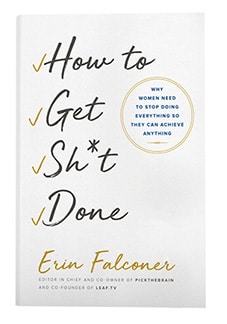
GET THE BOOK BY
ERIN FALCONER!


Thank you for your blog article. Thanks Again. Want more.
リアルなダッチワイフの世界へようこそ。 最高のダッチワイフを見つけることになると、あなたは正しいページにたどり着きました! Yourdollは、世界中のダッチワイフのような生活のトップサプライヤーです。 YourDoll JP https://yourdoll.jp
Very good information. Lucky me I recently found your blog by accident (facebook). I have saved as a favorite for later! Sex Doll Blog
Having read this I thought it was really enlightening. I appreciate you taking the time and energy to put this content together. I once again find myself personally spending way too much time both reading and commenting. But so what, it was still worthwhile!
You should take part in a contest for one of the finest websites on the web. I will recommend this website!
에볼루션코리아
977ufQoaP’`&
에볼루션카지노
868FYggMp]:&
에볼루션바카라
047unWpZK[>]
에볼루션룰렛
113ctWnYN?`-
에볼루션블랙잭606oQOKaJ%=(
The best e-cigarette liquid site in Korea. Korea’s lowest-priced 전자담배 액상 사이트 e-cigarette liquid.
스모크밤255 스모크밤
에볼루션카지노
546Uxafed`~;
Presenting Sensational, the performance toolkit that can help you function smarter and live far better.