

Is your life ruled by love or by fear? Love and fear are opposite emotional attitudes that shape our life in very different ways. The psychoanalyst John McMurray describes the difference like this:
“The fear-determined have no sun in themselves and go about putting out the sun in other people. The love-determined have life in them, abundant life. They are the people who are really alive, of whom it can be said that they possess eternal life as a well within them perpetually.”
Life is a lot more beautiful and vivid if it is determined by love and not by fear. I’m sure you can imagine that someone determined completely by love would be a kind of saint. In contrast, most of us ordinary human beings are determined by both forces, love and fear. However, in my experience, even a tiny shift towards love—and away from fear—can bring a lot more happiness.
Here are 7 tips that you can move towards love and away from fear.
1. Cultivate gratitude
Gratitude makes us feel happier. If you remember to be grateful for the blessings of your life, you start to feel more connected to yourself and others. When you let go of niggles and embrace gratitude instead, love springs up.
2. Reality-test your fear
Sometimes fear can be like a cloud that keeps out the sunlight. Then everything feels huge and oppressive. A simple way to deal with fear is to test its reality. Write down three things that you are afraid of. Then look at each point and ask yourself, “Is this fear really grounded in reality?” I know that when I do this, I often find that my fears are unfounded. It’s like living in a shadow-land, peering into the future and expecting bad things to happen.
3. Take action
Fear is often born out of inaction. For example, if you get a sense that your health is impaired, but you don’t check it out with a doctor, you may start to imagine that you are heading for a major health crisis. (I could fill a whole notebook with illnesses I once thought I had – but never actually got!) Once you’ve been to a doctor and reviewed the problems, the steps towards renewed health may seem much more manageable.
Taking action is the best antidote to fear. Once you start to address the issues one by one, fears shrink and may even disappear.
4. Cultivate friendships
Good friends are important because they teach us to love. It’s often much easier to love a good friend than it is to love and forgive our partner. Friends are lasting companions in life. It’s good to talk with them when we feel afraid. They can give us a fresh perspective on what is troubling us.
5. Be generous
In the quote above, John McMurray points out that fear-determined people have no sun in themselves and “go about putting out the sun in other people.” Fear makes us narrow-minded and we tend to put down others. Here is how I deal with that: when I notice I’m getting negative, I put a small pebble into one of my pockets. Each time I catch myself using a put-down, I quietly shift the pebble into the other pocket and say to myself kindly, “Well, maybe I can say that differently next time.”
6. Practise kindness
Kindness is ‘love-in-action’. It’s good to make a habit of it. The trick is to notice what people need. Here is an example: yesterday I was talking to a stall-holder at a farmers’ market who fashions wooden spoons. He saw that I was carrying a bag of luscious, fresh corncobs. He said, “Oh, they look nice!” Then he sighed, “Oh well, by the time I’ve finished selling at my stand they’ll have all gone.” I offered to get some for him. It was a small action but it made us both feel good. Try and spot one occasion each day when you can be of help.
7. Open your awareness
Fear tends to make us focus inwards. A way out of is to do the opposite and open your awareness to include everything around you. For example, if you notice anxious thoughts, open you mind and listen to sounds around you. Maybe you can hear birdsong, or traffic noise, or children playing. This has an instant calming effect and fear wanes.
If you follow these 7 tips, you’ll move towards more love and less fear in your life. Soon you will notice an upsurge of happiness and contentment, instead of fear and anxiety.
What is your experience of living with love or with fear? Maybe you could share your special way of inviting love into your life and saying ‘good-bye’ to fear?
***
This guest article was written by Mary Jaksch from http://goodlifezen.com. She is a psychotherapist, Zen master and author.
Image by Jonrawlinson.
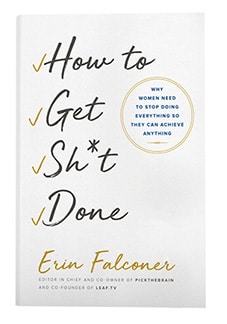
GET THE BOOK BY
ERIN FALCONER!


Thanks again for the article post.Much thanks again. Really Great.
Thanks for sharing, this is a fantastic article post.Much thanks again. Awesome.
Im thankful for the blog article. Keep writing.
I really enjoy the blog.Really looking forward to read more. Awesome.
I really enjoy the blog article. Keep writing.
I think this is a real great article post.Really looking forward to read more. Keep writing.
Great, thanks for sharing this article post.Really looking forward to read more. Will read on…
Thank you ever so for you article.Really thank you! Fantastic.
Very good blog article.Thanks Again. Keep writing.
This is one awesome blog.Really looking forward to read more. Will read on…
Thank you for your article post.Thanks Again. Really Cool.
I am so grateful for your article.Really thank you! Great.
Fantastic article.Really looking forward to read more.
Enjoyed every bit of your article.Thanks Again. Really Cool.
Really appreciate you sharing this blog post.Thanks Again. Want more.
I cannot thank you enough for the article post.Really looking forward to read more.
Awesome article post.Really looking forward to read more. Really Great.
I really enjoy the blog post.Thanks Again. Awesome.
Really enjoyed this blog article. Much obliged.
Thanks again for the blog article.Thanks Again. Cool.
I really enjoy the blog article.Much thanks again.
Major thanks for the article.Really looking forward to read more. Fantastic.
Thanks a lot for the blog.Thanks Again. Great.
Thanks a lot for the article post.Much thanks again. Will read on…
Im grateful for the article post.Really looking forward to read more. Really Great.
Awesome article post. Really Cool.
Thank you for your article post.Really looking forward to read more. Fantastic.
Enjoyed every bit of your article post.Thanks Again. Keep writing.
Appreciate you sharing, great article post.Much thanks again. Much obliged.
Enjoyed every bit of your article.Much thanks again. Want more.
Wow, great blog post.Much thanks again. Really Cool.
Rather they have a molded sole with ridges that give the grip.
I am so grateful for your blog post.Much thanks again. Keep writing.
Looking forward to reading more. Great blog post.Really thank you! Great.
Hi, I wish for to subscribe for this weblog to obtain hottest updates, so where can i do it please help out.
Dạy trang điểm cá nhân
Enjoyed every bit of your article post.Thanks Again. Much obliged.
This is one awesome post.Much thanks again. Cool.
Very informative blog article.Much thanks again. Really Cool.
I appreciate you sharing this blog post. Keep writing.
Get best traffic software, that automatizes your adverting plan for your business. Get millions of visitors to your website with best traffic bots. Don’t waste your money in low quality bots anymore. HighTicket Hijack PRO Software. Click in my profile name for more details.
Major thankies for the blog.Really looking forward to read more. Keep writing.
Great article. Great.
Say, you got a nice article.Thanks Again. Will read on…
Hey, thanks for the blog article.Much thanks again. Really Great.
Fantastic article post.Thanks Again. Much obliged.
This is one awesome article. Want more.
Thanks so much for the blog.Really thank you! Keep writing.
Thanks-a-mundo for the article.Really thank you! Keep writing.
I am so grateful for your blog post. Great.
에볼루션코리아
094UgFLXg?!\
에볼루션카지노
414XlNgSW|/_
에볼루션바카라
254SodEnu_#_
에볼루션룰렛
680wAHeWl=/#
에볼루션블랙잭446nszoro?[>
The best e-cigarette liquid site in Korea. Korea’s lowest-priced 전자담배 액상 사이트 e-cigarette liquid.
스모크밤001 스모크밤
에볼루션카지노
926MPedMb/`[
에볼루션카지노
565JYeZHk<!:
에볼루션카지노
229ZdlBdV$\$
에볼루션카지노
453qinulJ^;[
강남사설카지노
931AUoeXP\”~
One other thing I would like to talk about is that instead of trying to accommodate all your online degree tutorials on times that you conclude work (because most people are fatigued when they come home), try to find most of your lessons on the weekends and only 1 or 2 courses in weekdays, even if it means a little time away from your saturday and sunday. This is fantastic because on the saturdays and sundays, you will be a lot more rested along with concentrated upon school work. Thanks alot : ) for the different points I have acquired from your blog site.
I cannot thank you enough for the article. Awesome.
Great article post. Great.
Thanks a lot for the article. Want more.
Very neat blog.Really thank you! Keep writing.
Really informative article post. Want more.
Im thankful for the blog post.Thanks Again. Really Cool.
Thanks so much for the article.Really thank you!
Thanks so much for the blog post.Much thanks again. Great.
Thank you ever so for you post.Much thanks again. Much obliged.
Miami Post: Your source for South Florida breaking news, sports, business, entertainment, weather and traffic https://miamipost.us/
Looking for quick and easy dinner ideas? Browse 100
Yolonews.us covers local news in Yolo County, California. Keep up with all business, local sports, outdoors, local columnists and more. https://yolonews.us/
Outdoor Blog will help you live your best life outside – from wildlife guides, to safety information, gardening tips, and more. https://outdoorblog.us/
Baltimore Post: Your source for Baltimore breaking news, sports, business, entertainment, weather and traffic https://baltimorepost.us/
Healthcare Blog provides news, trends, jobs and resources for health industry professionals. We cover topics like healthcare IT, hospital administration, polcy
Medical More provides medical technology news and analysis for industry professionals. We cover medical devices, diagnostics, digital health, FDA regulation and compliance, imaging, and more. https://medicalmore.us
Major thanks for the blog article.Really thank you! Great.
NewsBreak provides latest and breaking Renton, WA local news, weather forecast, crime and safety reports, traffic updates, event notices, sports https://rentonnews.us
I value the article. Cool.
I am so grateful for your article. Keep writing.