Picking the Collective Brain: What tools do you use to manage your personal finances?
It’s been approximately 16 months since I entered the working world and assumed responsibility for my personal finances. In that time, the number of accounts and expenses I need to track has grown to the point where I’m desperately in need of a tool to manage it all.
There are so many options that it’s hard to distinguish one from the next, so I turn to the PickTheBrain community: what tool do you use to manage your personal finances?
Here is the main criteria:
- Simple: Tons of features aren’t a must, but speed and usability are.
- Cost Effective: Cheap is the best price, but I’d spend a moderate amount for the right package.
- Accessible: Ideally there would be a solution that can be accessed from multiple computers (PC and Mac).
- Comprehensive: Capable of handling a wide range of expenses, income streams, and bank/investment accounts.
After that I’m open to anything. I really appreciate your responses and hopefully we’ll be able to create a comprehensive list of best tools available.
How to Find Your Passion for Anything

There’s a big myth in our culture: that passion can only be spontaneous. You either love your job or you don’t. You either enjoy exercising or hate it. You are interested in reading books or you find them boring. That passion can’t be forced or created.
I disagree. Passion can be created. Even for things you don’t currently enjoy.
By tweaking the activities and pursuits you engage in, you can find a passion for anything. All it takes is a bit of patience and an open mind.
The benefit is that you end up loving the things you have to do anyways. Exercising, learning, studying, working and almost any pursuit can be made into a passion. And if you know how to do it, existing passions can be turned from mildly interesting to exciting. The skill of finding your passion is like turning up the dial for the amount of color you experience in life. Read the Rest of This Article »
Memory Improvement Technique
The ancient Romans and Greeks placed tremendous demands on the memory. Lawyers and politicians were expected to memorize long, complex arguments and deliver them impeccably, while poets delivered epic works orally as a type of theater (in fact Homer was most likely illiterate).
In order to accomplish these tasks, the ancients used a memory improvement technique discovered by the Greek poet Simonides:
Although the method may seem peculiar at first, any person can use it to improve their recollection of anything, from shopping lists to lecture outlines. Once you find a way to “see” the items you must remember, you can use the trick on different strings of information.
The mnemonic device, known as the loci method, involves placing mental pictures of items in specific locations inside a room, in a specific order. A person can then “walk” through the room and see all the objects that must be recalled. Each person must develop his or her own locational system. Teachers in antiquity recommended using public places such as temples or meeting houses as sites for spatial memory training; an individual would stand inside a temple and memorize the position of each column and statue, from the main entrance, along the right wall, across the front, back down the left wall, and so on. Each item from a list would then be assigned to a column, statue or other feature, in a given order. Later, the memorizer would visualize the room to find each item.
The articles goes on to provide some practical examples for putting the technique to use in your own life. There is also an interesting back story about the technique’s original discovery.
A Memory Improvement Technique from the Greeks and Romans [SciAm] (via SharpBrains)
10 Money Mistakes to Avoid
As creatures of habit, who like to repeat the same behavior, our personal finance habits have an enormous impact on our financial well being. Unfortunately, all too many people fall victim to the same common money mistakes.Recognizing and eliminating these mistakes is the first step to financial independence. Here are the money mistakes that you need to avoid. How many are you guilty of? Read the Rest of This Article »
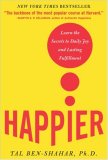
Review: Happier by Tal-Ben Shahar
Note: Each week PickTheBrain reviews a book or product related to self improvement. This review represents the honest opinion of the author, but we’d like to disclose that we receive a small commission on orders.
Some of you might recall when PickTheBrain first mentioned Happier, after Tal-Ben Shahar’s appearance on The Daily Show a few months back. It was exciting to see that self improvement is spreading to Harvard classrooms and being legitimized by academia and the mainstream media.
After finally finishing the book, my overall impression is a good one. Although I wouldn’t put it in the same league as The Magic of Thinking Big, it is definitely a worthwhile book that introduced me to some new ideas and gave me a lot to think about. Read the Rest of This Article »


39 Comments